AI-driven Last Mile Carrier Tracking: What’s Next for 2026 and Beyond
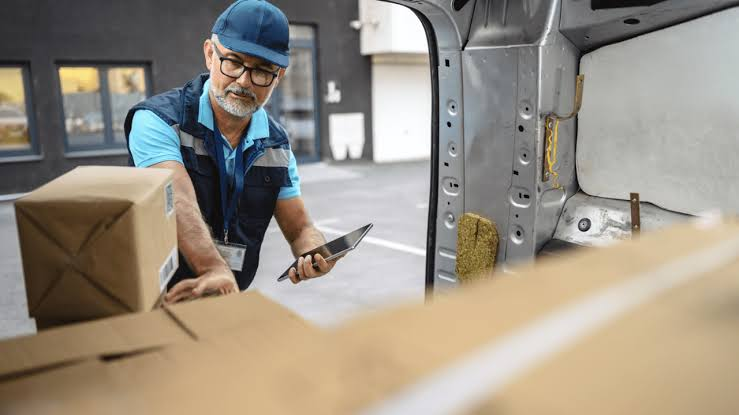
AI is changing delivery operations from a monitoring function into a decision engine. For years, last mile carrier tracking has helped enterprises answer a simple question: where is the order? In 2026 and beyond, the more important question becomes: what should happen next?
That shift matters because delivery networks now depend on multiple carriers, gig fleets, regional partners, strict SLAs, and rising customer expectations. Basic tracking links and delayed carrier scans cannot accommodate that level of complexity.
Modern last mile carrier tracking platforms increasingly combine route planning, real-time tracking, predictive ETAs, resource allocation, and automated dispatch management in one operating layer. For logistics leaders, last mile carrier tracking is becoming the foundation for AI-led execution, predictive control, and smarter carrier governance.
Why Last Mile Carrier Tracking is Moving Toward AI-led Control
Traditional tracking shows what happened. AI-led tracking helps teams understand what is likely to happen and which action can prevent disruption. That difference changes how dispatchers, carriers, drivers, finance teams, and customer support teams work every day.
Instead of waiting for a late delivery alert, AI models can compare route progress, delivery windows, carrier behavior, traffic patterns, stop history, and service-time variance. This helps teams identify orders at risk before customers experience the failure.
AI route optimization now focuses on real-time insights, dynamic routing, cost control, resource utilization, and better delivery outcomes. AI is not one tool here. It is a decision layer that combines multiple models and operational signals.
The future of last mile carrier tracking is not passive visibility. It is live execution intelligence that helps teams intervene earlier, allocate carriers smarter, and improve every route cycle.
10 AI Trends Shaping the Future of Last Mile Carrier Tracking
Enterprises need AI that works across planning, routing, dispatch, driver workflows, carrier operations, customer communication, and post-delivery analytics. These trends show where the market is heading next.
- Predictive ETA Engines Become Standard
AI-driven ETA engines move beyond fixed dispatch-time estimates. They continuously adjust arrival windows using live location, driver behavior, stop duration, route density, and delivery history.
AI route optimization uses real-time data, predictive analytics, and machine learning to improve routing accuracy and delivery efficiency. This makes last mile carrier tracking more useful for both operations teams and customers. Dispatchers see risk earlier, while customers receive more accurate delivery updates without repeated support follow-ups.
- Carrier Risk Scoring Improves Allocation Decisions
Carrier selection becomes more data-led. AI can score carriers by lane, delivery type, time window, region, service level, failed-attempt history, and exception frequency. This helps logistics teams choose the right partner for the right shipment. Over time, last mile carrier tracking feeds smarter carrier scorecards that support procurement, contract reviews, and daily allocation.
- Agentic AI Supports Dispatchers
Agentic AI helps dispatchers summarize route risks, recommend next actions, trigger workflows, and prioritize urgent exceptions. This does not remove human oversight. It reduces repetitive monitoring and manual coordination. AI dispatcher models are moving toward human-in-the-loop workflows across route planning, driver coordination, failed-delivery recovery, and invoice reconciliation.
- AI Improves Service-time Prediction
Service time is one of the hidden causes of poor delivery accuracy. Two stops may look similar on a map but behave very differently in execution. AI can learn actual dwell times based on location, customer type, parking difficulty, driver behavior, building access, and unloading complexity. This makes last mile carrier tracking a stronger input for route planning software and route optimization software.
- Proof-of-Delivery (PoD) Audits Become Smarter
AI can audit PoD records for quality, completeness, and risk. Image recognition, OTP validation, signature comparison, and anomaly detection can flag suspicious handovers before disputes grow. These capabilities help enterprises strengthen compliance, reduce delivery disputes, verify handovers, and improve customer trust across high-volume carrier networks.
- Customer Communication Becomes More Personalized
AI helps enterprises tailor delivery communication based on preferences, anxiety signals, historical behavior, delivery instructions, and past service issues. Instead of sending generic delivery updates, systems can trigger more relevant notifications, rescheduling options, and support prompts. This makes last mile carrier tracking part of the customer experience layer, not just the operations layer.
- Network Planning Uses Tracking Data Earlier
AI uses tracking data to improve territories, capacity planning, hub placement, and carrier mix before delivery pressure appears. Tracking data can support density analysis, demand smoothing, territory sizing, fleet capacity planning, carrier analysis, and cost optimization. This helps logistics teams plan capacity before operational stress reaches the network.
- Finance Workflows Become More Automated
Carrier invoices, PoD records, service failures, and contract rates often sit in separate systems. AI can connect these signals to support invoice reconciliation, dispute resolution, and billing audits. This makes last mile carrier tracking valuable beyond operations. Finance teams can connect what happened in the field with what carriers bill later.
- Dynamic Route Re-optimization Becomes More Responsive
AI helps teams adjust routes in real time based on traffic, weather, customer availability, driver capacity, and delivery-window changes. This makes last mile carrier tracking more adaptive when plans shift after dispatch. AI route optimization uses real-time data, predictive analytics, and machine learning to support dynamic routing, service-time prediction, and delivery efficiency.
- Real-time Monitoring Connects With Hybrid Delivery Networks
Enterprises increasingly manage private fleets, gig partners, regional carriers, lockers, and other delivery models through one control layer. Last mile carrier tracking needs to connect IoT-supported monitoring, AI decision-making, and hybrid delivery networks for better operational control.
Research on last-mile delivery optimization highlights AI-driven decision-making, IoT-supported real-time monitoring, and hybrid delivery networks as key areas shaping future operations.
How Enterprises Should Prepare For AI-Driven Last Mile Carrier Tracking
Enterprise teams should avoid treating AI as a plug-in feature. It needs clean data, operational governance, workflow discipline, and measurable business goals. Start by improving data quality across addresses, carrier events, PoD records, driver statuses, and exception codes. Poor data will weaken every AI recommendation.
Next, define where AI should assist and where humans must approve. Dispatch decisions, customer communication, carrier reassignment, invoice reconciliation, and service recovery all need clear governance. Then, connect last mile carrier tracking with route planning software, carrier management, customer experience tools, and analytics platforms.
AI becomes more powerful when it can see the full delivery context, not isolated tracking events. Finally, measure impact through ETA accuracy, first-attempt success, on-time delivery, route adherence, WISMO reduction, cost per delivery, and carrier performance.
Build AI-ready Carrier Tracking For The Next Delivery Era
The next phase of delivery technology will not be defined by tracking dots moving across a map. It will be defined by how quickly enterprises convert signals into decisions.
Last mile carrier tracking will become a predictive, AI-led control layer that supports dispatchers, carriers, drivers, customers, and finance teams. It will improve ETA accuracy, exception recovery, carrier allocation, PoD quality, and route planning feedback.
With technology partners such as FarEye, enterprises can integrate AI agents, dynamic routing, carrier intelligence, customer communication, and analytics into a single scalable operating model. The next step is to review where your current tracking stops in terms of visibility. Then build AI-ready workflows that turn every delivery signal into faster, smarter, and more accountable execution.

Alexia is the author at Research Snipers covering all technology news including Google, Apple, Android, Xiaomi, Huawei, Samsung News, and More.










1 thought on “AI-driven Last Mile Carrier Tracking: What’s Next for 2026 and Beyond”