AMD RX 9000 Series: Everything We Know So Far
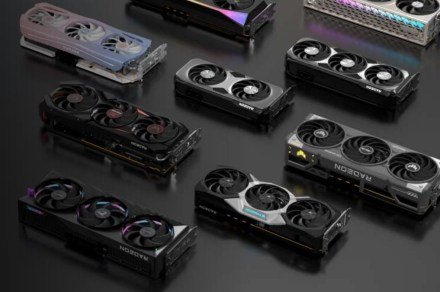
AMD’s upcoming RX 9000 series GPUs are generating plenty of buzz in the gaming and tech world. With the highly-anticipated RDNA 4 architecture, these graphics cards are set to compete in the mainstream market and cater to gamers looking for affordable yet powerful performance. While AMD has kept most details under wraps, leaks and official announcements give us a glimpse of what to expect. Here’s everything we know so far about the RX 9000 series, including pricing, availability, specs, and features.
AMD RX 9000 Series: Pricing and Availability
Leading up to AMD’s CES 2025 keynote, many hoped for clarity on RDNA 4 pricing and release dates. However, the GPUs received only a brief mention without any solid information. That said, AMD shared slides with the press, confirming the RX 9070 XT/non-XT and RX 9060 XT/non-XT models.
Initially, rumors suggested a January 22 launch date after the GPUs briefly appeared for preorder on B&H, but they were later pulled down. According to a Chiphell forum leaker, AMD delayed the launch while waiting for Nvidia to make its next move. However, AMD’s Vice President David McAfee has since announced that the RX 9000 series will launch in March 2025.
“Radeon 9000 series hardware and software are looking great, and we are planning to have a wide assortment of cards available globally. Can’t wait for gamers to get their hands on the cards when they go on sale in March!”
— David McAfee (@McAfeeDavid_AMD) [January 20, 2025]
While the exact pricing remains a mystery, leaks suggest the RX 9070 XT reference card may cost $479, with partner models potentially reaching $549. For now, this remains speculation, and we’ll need to wait until March for official confirmation.
AMD RX 9000 Series: Specs and Architecture
AMD’s RX 9000 series is built on the RDNA 4 architecture, with key improvements over RDNA 3. Here’s a glimpse at the specs we know so far:
| Process Node | TSMC N4P | | Architecture | RDNA 4 | | Chip | Navi 48, Navi 44 | | Memory Type | GDDR6 | | Maximum Bus Width | 256-bit | | Maximum Clock Speed | 3GHz-3.3GHz |
The RDNA 4 architecture introduces several upgrades, including third-gen ray tracing accelerators, improved ray tracing performance per compute unit (CU), second-gen AI accelerators, and a next-gen Radiance Display engine. These features aim to enhance gaming performance by delivering better ray tracing and upscaling capabilities.
One of the most notable advancements is the inclusion of “supercharged AI compute,” which will power AMD’s new FidelityFX Super Resolution 4 (FSR 4) technology. This generation also features optimized media encoding and better power efficiency, thanks to AMD’s switch to the TSMC 4nm process (likely N4P). Package sizes are also notably smaller, with Navi 44 GPUs measuring just 29 x 29 mm, according to leaker Olrak29 on X.
Package Sizes:
Navi 23: 35 x 35mm
Navi 44: 29 x 29mm
— Everest (@Olrak29_) [October 14, 2024]
Despite these improvements, AMD is not targeting the high-end market with this generation. Instead, the focus is on delivering strong gaming performance for mainstream users. AMD’s Senior Vice President Jack Huynh confirmed this strategy in an interview with Tom’s Hardware, saying:
“Do I want to go after 10% of the total addressable market (TAM) or 80%? I’m an 80% kind of guy because I don’t want AMD to be the company that only people who can afford Porsches and Ferraris can buy. We want to build gaming systems for millions of users.”
This approach suggests AMD’s RX 9000 series will focus on competing with Nvidia’s mid-range offerings, such as the RTX 5070, rather than going head-to-head with flagship GPUs like the RTX 5080 or 5090.
AMD RX 9000 Series Lineup
Based on leaks and AMD’s announcements, the RX 9000 lineup will include two key models: the RX 9070 XT and the RX 9060 XT. Below is what we know about each card.
AMD Radeon RX 9070 XT
The RX 9070 XT is expected to be the flagship of the RDNA 4 lineup. Here are the rumored specs:
- Chip: Navi 48 XTX
- Cores: 4,096
- Memory: 16GB GDDR6
- Bus Width: 256-bit
- Clock Speed: Up to 3.1GHz
- Memory Bandwidth: 640GB/s
- Total Board Power (TBP): ~260 watts
AMD claims the RX 9070 XT will perform similarly to the RX 7900 XT, with the non-XT model rivaling the RX 7900 GRE. This positions it as a direct competitor to Nvidia’s RTX 5070. Early performance leaks vary, with some suggesting it could rival the RTX 4080, but most estimate it will match the RX 7900 XT. Pricing and availability will determine whether it can carve out a strong position in the market.
AMD Radeon RX 9060 XT
The RX 9060 XT is a more budget-friendly option, featuring the Navi 44 GPU. While details remain scarce, leaks suggest it could feature two variants:
- Memory Bus: 192-bit or 128-bit
- Memory: 8GB for the non-XT variant, and up to 16GB for the XT variant
Expected to compete with Nvidia’s RTX 4060, the RX 9060 XT aims to deliver solid performance for mainstream gamers. Pricing is rumored to fall between $250 and $350.
AMD RX 9000 Series: FSR 4 and Upscaling
AMD is introducing FidelityFX Super Resolution 4 (FSR 4) with the RX 9000 series, offering enhanced upscaling technology exclusive to RDNA 4 GPUs. FSR 4 promises high-quality 4K upscaling and improved frame generation, made possible by the upgraded AI hardware in RDNA 4.
FSR 4 will initially be available in games that already support FSR 3.1, such as Cyberpunk 2077 and Horizon Forbidden West. While currently limited to RDNA 4, AMD’s Chief Architect Frank Azor hinted that the technology might eventually be optimized for RDNA 3 GPUs.
“We may be able to optimize it [FSR 4] to work on RDNA 3 architecture. And we are, and we want to do it, but we have work to do for now.”
— Frank Azor
This statement leaves the door open for future compatibility, though no guarantees have been made.
Final Thoughts
AMD’s RX 9000 series is shaping up to be a strong contender in the mainstream GPU market, offering a balance of performance and affordability with its RDNA 4 architecture. While the focus is not on high-end competition, the RX 9070 XT and RX 9060 XT are poised to challenge Nvidia’s mid-range offerings. With improved ray tracing, upscaling, and power efficiency, AMD is catering to gamers who want great performance without breaking the bank.
As we approach the March 2025 launch, more details about pricing, performance, and availability will likely emerge. For now, the RX 9000 series represents an exciting new chapter in AMD’s GPU lineup that could redefine gaming for the mainstream audience.

Alexia is the author at Research Snipers covering all technology news including Google, Apple, Android, Xiaomi, Huawei, Samsung News, and More.