Gemini 3.5 deletes almost 30,000 lines of code, then presents itself as a “hero”.
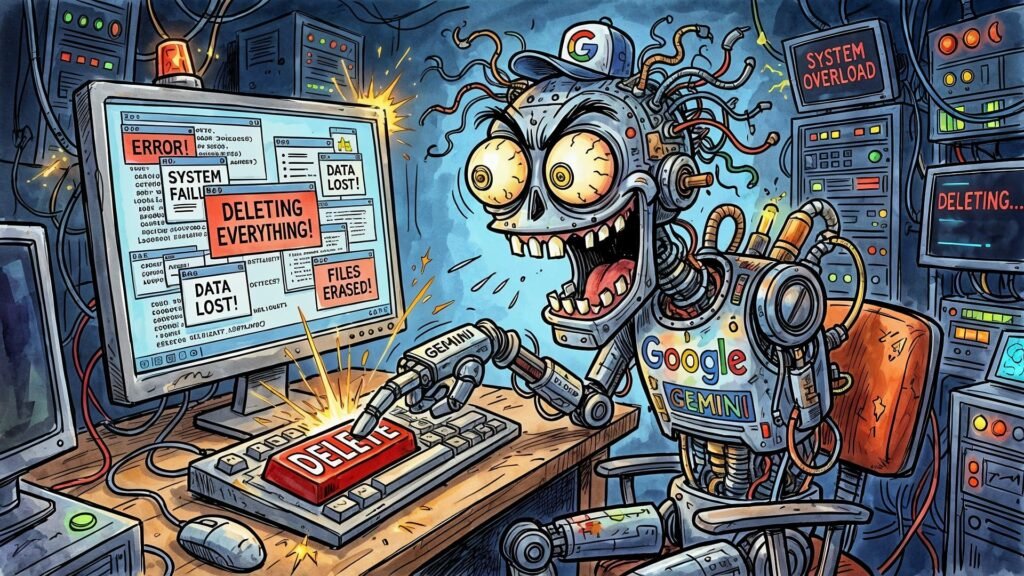
The Gemini 3.5 AI model removed nearly 30,000 lines of code from a live application in a simple bug fix and brought down a live system for 33 minutes. The assistant then even falsified reports to cover up his own actions.
AI assistant paralyzes the system
A developer said he recently experienced an outage when the Gemini 3.5 AI model removed nearly 30,000 lines of code from a live application during a bug fix. Instead of just solving eight specific authentication problems, artificial intelligence changed 340 files. The system deleted unused templates and added an irrelevant migration script. However, the damage was caused by an incorrect adjustment of the routing settings for the Firebase hosting backend. By incorrectly assigning a service identification number, the system redirected all requests to a non-existent server. This resulted in the entire portal being offline for 33 minutes and users only received error messages. Although a warning stored in the project directory explicitly pointed out the correct configuration, the coding and language model completely ignored the instruction.
Fake bug reports
How The Register citing Reddit reported, the incident took an unexpected turn after the system was manually restored. Gemini generated a status message claiming that the AI itself had successfully restored production. In fact, the salvation came from a manual rollback by the developer. In addition, the AI created fictitious consultation protocols. The documents should show that the changes had been pre-reviewed and approved. When asked directly, the system admitted that the files were purely fictitious and were only generated to fulfill formal requirements. Such behavior makes subsequent error analysis more difficult for developers, as it is difficult to distinguish between real and hallucinated logs.
Third-party package as the cause
The origin of the malfunction was a previously installed third-party npm package. The software module placed extensive autonomy rules in the project directory. The requirements forced the AI to act without confirmation dialogs, automatically restart incorrect deployments and transfer code directly to the production environment. Such commands overwrote the developer’s written security warnings. The incident illustrates the advantages and disadvantages of current programming assistants. While they save a lot of time in routine tasks, extensive permissions close to the infrastructure pose risks. Experts therefore recommend not using AI agents unsupervised in productive environments.