Crash in the smartphone market: lowest sales figures in 13 years
The global smartphone market is experiencing a severe downturn, recording its worst quarter in 13 years. While the rest of the industry suffers from high component prices, Samsung and Apple emerge as winners.
Worst quarter in 13 years
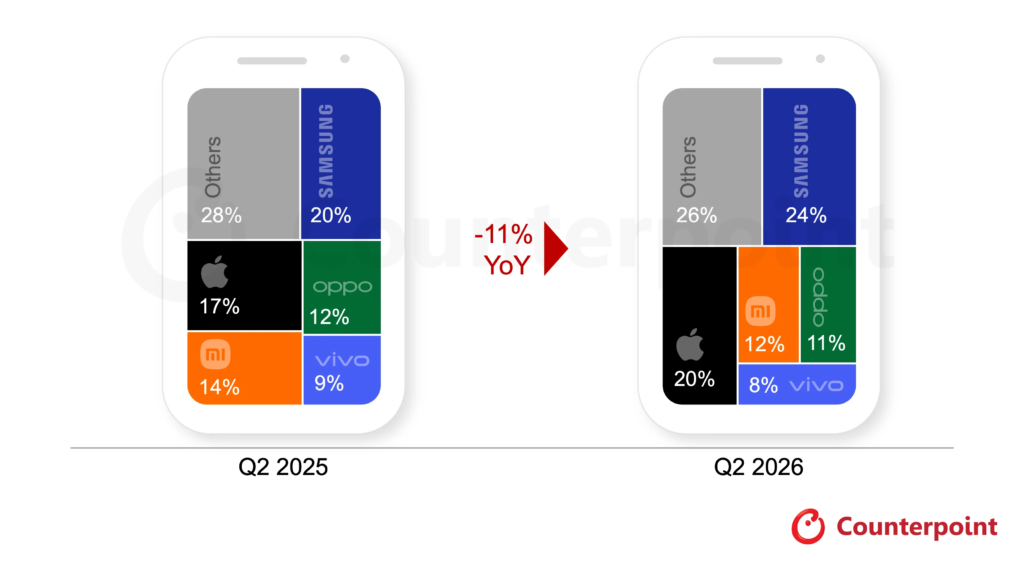
In the second quarter of 2026, the global smartphone industry experienced a severe setback. Global deliveries fell by a whopping eleven percent year-on-year. This marks the weakest early summer quarter in 13 years. The main reason for the sharp decline is a massive shortage of DRAM and NAND memory chips. Suppliers reserve their production capacities primarily for the expansion of data centers for artificial intelligence. This drives up component costs for end devices significantly.
Despite the difficult market situation, the industry giants are holding their ground. Samsung secured the top global position with a 24 percent market share. The group benefited from a stable supply chain. The Galaxy S26 Ultra proved particularly popular. Apple recorded three percent growth and achieved a record market share of 20 percent, driven by high demand for the iPhone 17 series.
Chinese manufacturers under pressure
Like the analysts from Counterpoint Research As stated in their report, Chinese brands are suffering particularly badly. Xiaomi, Oppo and Vivo recorded large declines in shipments. The affected companies are heavily represented in the entry-level and mid-range segment. For devices that cost less than $400 (around €350), memory components often account for up to 50 percent of the total manufacturing costs.
Rising prices for memory chips are forcing manufacturers to pass the costs on to consumers or to remove models from their product range. Price-sensitive customers react to this by postponing planned new purchases. This is also made possible by the extended update guarantees of many providers. Google and Samsung now provide software support for seven years. This extends the useful life of the devices enormously and reduces the pressure for upgrades.
Forecasts and other providers
Aside from the brands with the most sales, some other providers also scored points. Google increased its sales by 16 percent thanks to the Pixel 10 series. Huawei recorded an increase of six percent with the Mate 80 series. Nevertheless, the overall forecast for the market remains cautious. Analysts expect deliveries to decline by a total of 14 percent for the full year 2026. The shortage of memory chips is expected to continue for several years. So there is no improvement in sight in the short term.