Riemann conjecture: Anthropic employee provides alleged proof
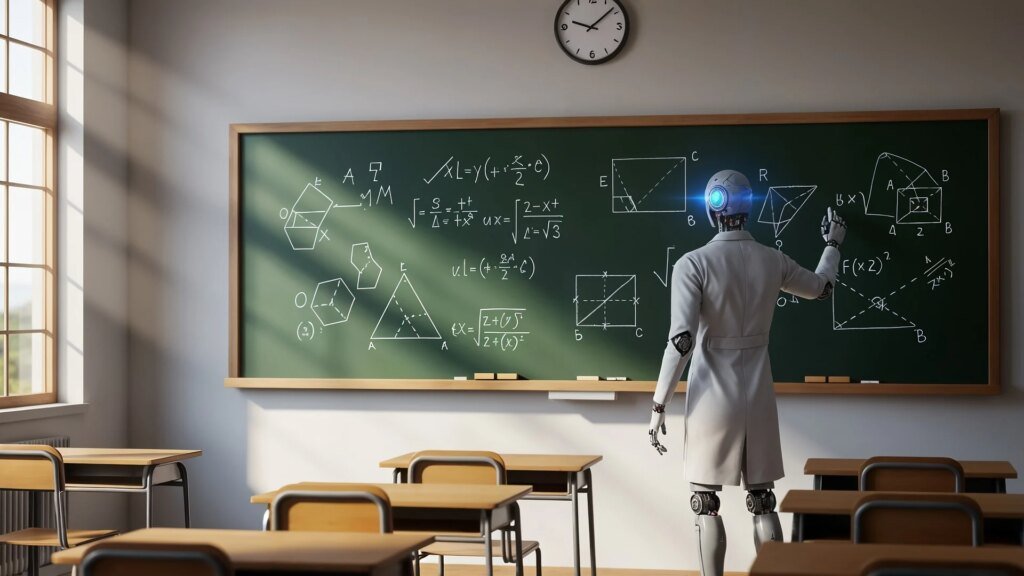
Complex, machine-like and barely readable by humans: Anthropic researcher Levent Alpöge has published a possible AI proof of the Riemann Hypothesis. To put it simply, it is a “prime number puzzle”.
AI to help with puzzles of the century
Anthropic mathematician Levent Alpöge says he has found proof of the Riemann conjecture using the AI model Claude. He made his announcement public, but an independent review is still pending. The results are initially available in the Lean programming language, which allows mathematical arguments to be checked automatically. According to Alpöge, a written elaboration would be extremely extensive. The conjecture formulated by Bernhard Riemann in 1859 concerns the distribution of prime numbers and the zeta function named after him. It says that all so-called non-trivial zeros of this function lie on a certain line.
The conjecture is one of the Clay Mathematics Institute’s seven Millennium Problems, each of which is worth one million US dollars (around 910,000 euros) to solve. As Phys.org reported, Alpöge admitted that he did not yet fully understand the mathematics used. He wanted to put the proof in writing. Riemann specialist Brian Conrey described the announcement as a potentially historic breakthrough, but had not yet seen a manuscript at the time.
Announcement after Anthropic’s IPO
Alpöge released his statement a day after Anthropic’s IPO. He had previously coordinated with company boss Dario Amodei. The mathematician admitted that the timing of the announcement could be viewed with skepticism.
Millennium problems
The seven Millennium Problems were selected by the Clay Mathematics Institute in 2000. One million US dollars was offered for each solution. Briefly and simply explained:
Consequences for science
If the proof is confirmed, it would also secure numerous mathematical statements that previously assumed the validity of the Riemann conjecture. According to Alpöge, his approach also solves the generalized Riemann conjecture. The announcement is not enough for the Millennium Prize to be awarded: the Clay Mathematics Institute requires publication in a peer-reviewed journal and a subsequent two-year review. The conjecture also has connections to computer science and physics. Prime numbers play a central role in modern encryption methods. The statistical patterns of distances between zeros are similar to those of energy states in atomic nuclei.