What MMO Players Can Learn From the CS2 Skin Economy
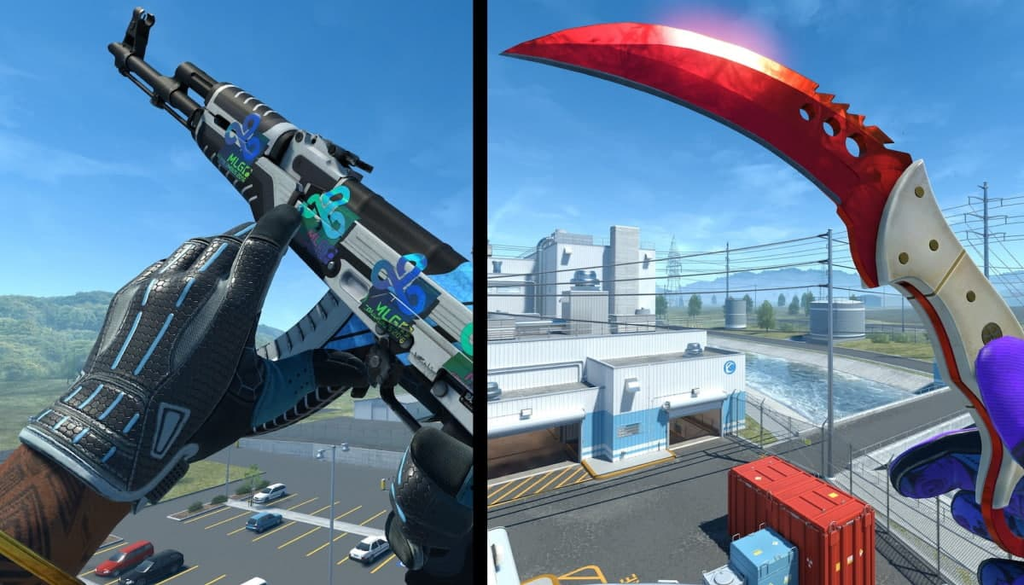
MMO players can learn three big lessons from the CS2 skin economy: cosmetic items tend to hold value longer than power-based gear, scarcity built into individual items creates lasting collector interest, and a player-driven market rewards patience and research far more than impulse. Security matters just as much, because any economy where items carry real value attracts scammers.
The two worlds work differently in important ways. MMO economies revolve around gold, crafting materials and gear that eventually gets replaced by the next expansion. CS2’s economy runs almost entirely on cosmetics that never become obsolete. Comparing the two highlights why some items keep their appeal for years while others lose relevance overnight.
Why Cosmetic-Only Items Hold Value Differently
In most MMOs, the most valuable items are tied to power. A top-tier weapon or armor set is prized because it improves performance in raids or player-versus-player content. The problem is power creep. Each new expansion or content patch introduces stronger gear, and last season’s best items lose most of their value almost immediately.
CS2 skins avoid this entirely because they don’t affect gameplay. A rifle skin released years ago performs exactly like the default weapon, and a new release doesn’t make it weaker. As a result, older skins often keep their appeal, and some become more desirable with age as their supply stops growing and their history becomes part of their identity.
For MMO players, this is a useful way to think about long-term value. Cosmetic items, mounts, rare appearances and discontinued rewards in MMOs often behave more like CS2 skins than like gear. They’re less likely to be replaced by the next patch, and their scarcity tends to grow over time.
Scarcity Built Into Every Item
One of the most distinctive features of CS2’s economy is that each skin has individual attributes. Float values determine how worn an item looks, and pattern indexes can change its appearance dramatically. Two items with the same name can have very different values depending on these numbers, which gives collectors a reason to look closely at every copy.
This creates layers of rarity within a single item. A skin might be common in Field-Tested condition, scarce in Factory New and extremely rare with a particular pattern. Collectors build knowledge around these details, sharing records of the best-known examples and tracking where standout items end up.
MMOs rarely go this far, but the same principle appears in random affixes, rare drop variations or limited-time rewards. Players who understand which attributes are truly scarce, rather than just rare-sounding, are usually better at spotting items with lasting value.
Player-Driven Markets and Price Discovery
CS2 has an active marketplace where prices are set by supply and demand among players. Popular items sell quickly, niche items take longer, and prices shift in response to updates, esports events and trends in content creation. Price history is widely tracked, which makes it easier to see whether an item is at a peak or a low point.
This teaches a lesson familiar to experienced MMO traders: hype rarely lasts. Items that suddenly become fashionable often rise sharply and then settle. Players who buy at the height of attention usually overpay, while those who wait for prices to stabilize tend to get better deals. Transaction fees on sales also act as a steady drain on value, much like gold sinks in MMOs, so frequent flipping rarely pays off as well as people expect.
Not every mechanic tied to items is about trading or collecting. Some CS2 sites offer coinflip modes, where two players stake items of similar value and one of them walks away with both. The result is purely down to chance, so there’s a real risk of losing the item you put in, and it has little to do with the market knowledge that makes item economies interesting to study.
Developer decisions also matter. When a game changes how items are distributed or adds new ways to use them, prices can move quickly across whole categories. MMO players who’ve lived through economy-shaking patches will recognize the pattern. Keeping an eye on official announcements is as important in CS2 as it is in any MMO.
Security and Trust in Economies With Real Value
When in-game items carry real-world value, fraud follows. CS2 players face fake trade offers, phishing sites that imitate login pages and scammers impersonating friends or trusted traders. MMO players know similar problems from account hacking and gold-selling operations, but the scale is larger when individual items can be worth significant sums.
Platforms respond with protections such as trade holds, confirmation steps and two-factor authentication. These can feel inconvenient, but they exist because instant, irreversible trades are exactly what scammers rely on. The lesson for MMO players is simple: the more valuable your account becomes, the more seriously you need to treat its security.
Trust also shapes the community. Well-known traders, clear records of notable items and community resources that document prices and patterns all help reduce uncertainty. In MMOs, the equivalent is reputable guilds, established traders and shared market data. In both cases, reputation is one of the most valuable assets a player can build.
Lessons MMO Players Can Take Back to Their Own Games
The first lesson is to separate items you enjoy from items you expect to hold value. In CS2, many players buy skins purely because they like how they look, and that’s the most reliable way to stay satisfied. In MMOs, the same thinking helps you avoid spending heavily on gear that will be outdated within months.
The second is to learn what truly drives scarcity. Look for items that can’t be obtained anymore, have limited supply or carry distinctive attributes, rather than chasing whatever is currently popular. Understanding the underlying mechanics of an economy is what separates informed players from those who follow the crowd.
Finally, treat your account and inventory as assets worth protecting. Use strong authentication, avoid unofficial links and take your time with any trade. Whether your most valued item is a CS2 knife or a rare MMO mount, the habits that protect it are the same, and they matter more the longer you play.

Alexia is the author at Research Snipers covering all technology news including Google, Apple, Android, Xiaomi, Huawei, Samsung News, and More.