Unlocking Career Growth with an MBA in Business Analytics Online

Key Takeaways
- Develop essential analytical and strategic skills that are valued across multiple industries.
- Gain experience with data visualization, statistical modeling, and leading business intelligence platforms.
- Enhance your decision-making power through real-world case studies and applied projects.
- Advance your communication and leadership skills to effectively manage teams and influence organizational direction.
Table of Contents
- Developing Core Analytics Skills
- Mastering Data Visualization
- Understanding Statistical Modeling
- Leveraging Business Intelligence Tools
- Applying Analytics to Decision-Making
- Enhancing Communication and Leadership
- Bridging Theory and Practice
- Preparing for Global Careers
In today’s data-driven world, organizations across industries are seeking professionals who can make sense of complex data and turn insights into actionable business strategies. Earning an MBA in business analytics online enables emerging leaders and experienced professionals alike to master advanced analytics, shape better decisions, and contribute more value to their companies.
Pursuing this specialized MBA program not only provides powerful analytical tools but also sharpens the business acumen needed to lead teams and drive commercial impact in both local and global contexts. The flexibility of an online format allows you to balance your studies with work and personal responsibilities while gaining sought-after expertise for the modern workplace.
Developing Core Analytics Skills
Core quantitative and analytical skills are at the heart of a business analytics MBA curriculum. Students build proficiency in applying statistical methods, such as regression, trend analysis, and forecasting, to interpret large-scale and often messy data sets. Courses typically introduce programming languages such as Python and R, ensuring that graduates are equipped to extract, clean, and analyze data efficiently, a must-have skill set in today’s job market.
Additionally, a strong focus is placed on problem-solving through quantitative reasoning and logical analysis. Students learn to approach business challenges using models that prioritize evidence-based outcomes, cultivating an innovative mindset in approaching data challenges.
This suite of skills prepares graduates to not only analyze and interpret data but also to deliver insights that drive critical business initiatives. Organizations across finance and healthcare seek professionals with this finely tuned skill set who can contextualize analytics within the broader picture.
Mastering Data Visualization
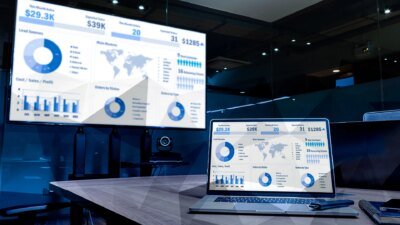
Presenting data in an understandable and engaging way is critical in a business context. Training in visualization tools like Tableau and Power BI allows aspiring analysts to create dynamic dashboards and visual reports, making it easier for decision-makers to spot trends and act on actionable information. The ability to transform complex data into accessible stories is a highly valued trait among employers, according to Harvard Business Review. Coursework typically focuses on both the technical and storytelling parts of visualization.
In today’s business environment, organizations collect and work with massive volumes of data, making the ability to distill this information visually especially important. Business analytics MBA programs often emphasize iterative design, interactive dashboards, and the ethical use of visuals to avoid misrepresentation and support sound business practices.
Understanding Statistical Modeling
Statistical modeling is fundamental to uncovering patterns and making more accurate predictions. In an MBA program focused on analytics, students learn to use advanced models, including clustering, hypothesis testing, and predictive analytics, to generate business recommendations. This helps them anticipate market shifts, customer preferences, and operational risks, an ability that provides a significant competitive advantage to organizations in rapidly changing industries.
Mastery of statistical modeling also equips students to collaborate effectively with data scientists and technical teams, ensuring that their recommendations reflect a rigorous analytical approach. By understanding not only the “how” but the “why” behind these models, MBA graduates foster stronger organizational trust in data-driven decisions.
Leveraging Business Intelligence Tools
Modern analytics work requires fluency with business intelligence platforms. Students receive hands-on training in platforms such as SQL for database querying and Python for automating processes. Ethical data handling, privacy, and governance are addressed to ensure compliance with global standards. These technical skills are paired with business strategy, enabling more meaningful data application across all levels of an organization.
This integration of tools and strategy is essential for building advanced reporting mechanisms and designing scalable analytics solutions that align with business objectives. Students learn not just to generate reports, but to develop dashboards and alerts that empower organizations to remain agile in competitive markets.
Applying Analytics to Decision-Making
The practical value of an MBA in business analytics is clearest in its application to real-world decision-making. Case studies, simulations, and project-based learning introduce scenarios from marketing, finance, supply chain, and operations. Graduates bring immediate value to their organizations by using data-driven insights to shape and justify strategic decisions in these key areas.
Exposure to real-life business challenges ensures that graduates understand how to evaluate risks, identify market opportunities, and recommend solutions that are measurable and impactful. This ability distinguishes analytics-savvy leaders in an increasingly numbers-focused business landscape.
Enhancing Communication and Leadership
A successful analytics leader must do more than crunch numbers. Robust MBA programs teach communication and leadership, often through group work, presentations, and interactive role-playing. Graduates leave with the confidence to present complex analytical findings to stakeholders and to lead cross-functional teams in implementing data-driven initiatives.
Effective communicators bridge the gap between technical teams and business executives, ensuring buy-in and seamless integration of new analytics initiatives within established company cultures. The leadership component of the program emphasizes adaptability, ethical influence, and collaboration, skills that are vital in today’s fast-paced business environments.
Bridging Theory and Practice
One of the hallmarks of top online MBA programs in business analytics is the focus on bridging theory and practice. Students may take on real-time business projects, consulting assignments, or hands-on capstones that address immediate organizational challenges. This practical emphasis ensures that concepts learned in class can be applied directly to the workplace, building experience and readiness for higher-responsibility roles.
Moreover, exposure to practical challenges not only cements theoretical comprehension but also nurtures innovation and entrepreneurial thinking. Many programs offer opportunities to network with industry professionals, facilitating valuable mentorship and career development.
Preparing for Global Careers
Demand for analytics professionals spans the globe. The coursework for an online MBA in business analytics addresses international trends and challenges, providing students with a global perspective and cultural competence, skills needed for roles in multinational companies. As organizations increasingly rely on digital transformation and data innovation, graduates are poised to compete for top roles worldwide. According to Forbes, the global analytics talent shortage is creating opportunities for those with the right skills.
Graduates gain the versatility to work with diverse teams across continents, adapting their approaches to different cultural, regulatory, and technological environments. This level of preparedness makes a business analytics MBA an exceptional credential in a digitally connected world. Alongside these technical and professional advantages, many programs offer access to alumni networks, personalized career coaching, and recruitment pipelines with international firms.
Choosing to pursue an MBA in Business Analytics online is a strategic investment in your career. By mastering technical, strategic, and interpersonal capabilities, you will position yourself to drive change and lead modern organizations into the future.

Alexia is the author at Research Snipers covering all technology news including Google, Apple, Android, Xiaomi, Huawei, Samsung News, and More.