How a Trucking Route Planner Improves Asset Use Across Freight Networks

Idle trailers, unused equipment, and drivers waiting on loads quietly drain profit from most freight operations. A trucking route planner addresses this by matching available capacity to demand across the entire network, not one lane at a time.
Fleet managers who rely on manual scheduling or single-load planning tools often cannot see where assets sit unused while other lanes run short. This gap between available capacity and actual utilization costs carriers real money every day, and losses grow as fleet size increases.
Such a trucking route planner closes that gap by treating trucks, trailers, and drivers as one shared resource pool. Let’s examine how this approach lifts asset utilization across an entire freight fleet over time.
The Asset Utilization Problem in Freight Networks
Freight carriers often plan routes lane by lane, assigning trucks to loads without checking what other assets are doing nearby. This creates deadhead miles, where trucks travel empty between drop-off and the next pickup location.
Empty miles alone can account for a significant share of total fleet mileage on any given route. Trailers also sit idle at yards while nearby lanes face equipment shortages that delay committed loads. These shortages often force dispatchers into costly last-minute rentals just to keep freight moving on schedule.
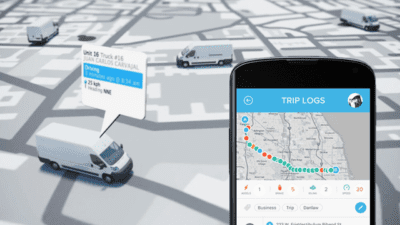
Sudden demand shifts in one region often leave equipment stranded in another, further widening this utilization gap. Without network-wide visibility, dispatchers cannot match idle assets to open capacity before deadlines pass. A trucking route planner solves this by tracking every truck, trailer, and driver across the full network at once.
How a Trucking Route Planner Improves Asset Use
A trucking route planner improves utilization by matching loads to the nearest available asset, not the next one in a queue. This reduces deadhead miles and shortens the time equipment sits unused between assignments across the network.
It also gives dispatchers a single view of every truck and trailer, regardless of which yard or terminal they started from that morning. This visibility matters most during peak season, when load volume spikes faster than most fleets can add new equipment.
- Higher Trailer Turns
The system identifies nearby trailers before dispatchers request new equipment from distant yards.
- Reduced Deadhead Miles
Matching loads to the closest available truck cuts empty miles and lowers fuel costs significantly.
- Better Driver Hours Utilization
Balancing assignments across the fleet keeps drivers within hours-of-service limits while maximizing productive time.
- Fewer Detention Delays
Real-time visibility lets dispatchers reroute trucks around known bottlenecks before drivers arrive at a dock.
Core Capabilities to Look for in a Trucking Route Planner
Not every scheduling tool that claims to plan routes actually optimizes asset use across a full network. A capable trucking route planner should include the following core capabilities before it earns a place in your dispatch stack.
- Real-time Asset Tracking
Monitors trucks, trailers, and drivers across the entire network simultaneously, not one lane at a time.
- Hours-of-Service (HoS) Integration
Factors in driver hours, equipment type, and delivery windows before assigning any load.
- LTL and FTL Routing Support
Handles less-than-truckload and full-truckload freight within the same planning engine, rather than separate tools.
- Agentic AI Support
Uses autonomous decision-making to reassign loads and resolve routing conflicts without waiting on manual dispatcher input.
- High-volume Processing
Handles thousands of loads and assets without slowing dispatch decisions during busy periods.
- Volume-spike Handling
Manages sudden demand spikes across multiple regions without service degradation or missed deadlines.
- Clean System Integration
Connects with existing telematics and dispatch software before a full network-wide rollout begins.
Measuring the Impact on Asset Utilization
Carriers track a handful of core metrics to confirm that adoption is paying off across the network. The table below outlines what to monitor and when results typically start to appear.
| Metric | What It Measures | Typical Timeline |
| Trailer Turns | How often trailers cycle through loads without sitting idle | Early gains within 60-90 days |
| Deadhead Percentage | Share of total miles driven without a loaded trailer | Early gains within 60-90 days |
| Driver Utilization Rate | Productive hours compared to total available hours | Early gains within 60-90 days |
| Trailer Pool Balance | Distribution of trailers across yards and regions | Later gains after 3-6 months |
| Exception Rate | Frequency of manual dispatcher overrides needed | Later gains after 3-6 months |
Sharing these results with drivers and dispatchers also builds trust in the system during the early rollout period.
Implementation Best Practices for Network-Wide Route Optimization
Successful rollouts follow a consistent set of practices during the first few months after adoption. The table below breaks down each practice and explains why it matters.
| Practice | Action | Why it Matters |
| Clean Data First | Verify trailer locations, driver hours, and equipment status | Weak data undermines every recommendation the system makes |
| Start With High-volume Lanes | Roll out on the busiest lanes before expanding network-wide | Utilization gaps are largest where volume is highest |
| Build Dispatcher Trust | Train dispatchers to follow network-wide recommendations | Manual overrides slow adoption and hide real gains |
| Set Review Cycles | Schedule regular reviews of planning rules | Freight patterns shift, so rules need periodic adjustment |
| Document Exceptions | Track cases where dispatchers override the system | Reveals gaps in underlying data feeds early |
What are the Changes That Fleet Managers can Expect After Adoption?
Carriers that adopt a trucking route planner typically report the following outcomes within the first few months.
- Tighter Trailer Pools
Fewer emergency equipment rentals within the first quarter after rollout.
- Less Manual Dispatching
Dispatchers spend less time locating available assets by phone.
- Fewer Detention Delays
Better load matching reduces unpaid driver wait time at docks.
- More Predictable Schedules
Balanced assignments keep routes consistent from week to week.
- Slower Gains Without Groundwork
Fleets that skip clean data and dispatcher buy-in see weaker early results.
Why Fleet Managers Should Prioritize a Trucking Route Planner Now
Asset utilization problems rarely fix themselves, and manual tools cannot see across an entire network at once. A trucking route planner closes that visibility gap by treating every truck, trailer, and driver as shared capacity.
Carriers that delay this shift usually pay for it through fuel and idle equipment costs. Fleet managers should prioritize real-time visibility over simple load assignment features instead of chasing capacity manually.
Many carriers pair this shift with technology partners such as FarEye to manage the rollout and validate results at scale. If your team still plans lane by lane, this approach is worth testing this quarter. A trucking route planner built for the whole fleet, rather than individual lanes, protects margins as volume grows.

Alexia is the author at Research Snipers covering all technology news including Google, Apple, Android, Xiaomi, Huawei, Samsung News, and More.