ChatGPT in Toyota? Here is What You Need To Know
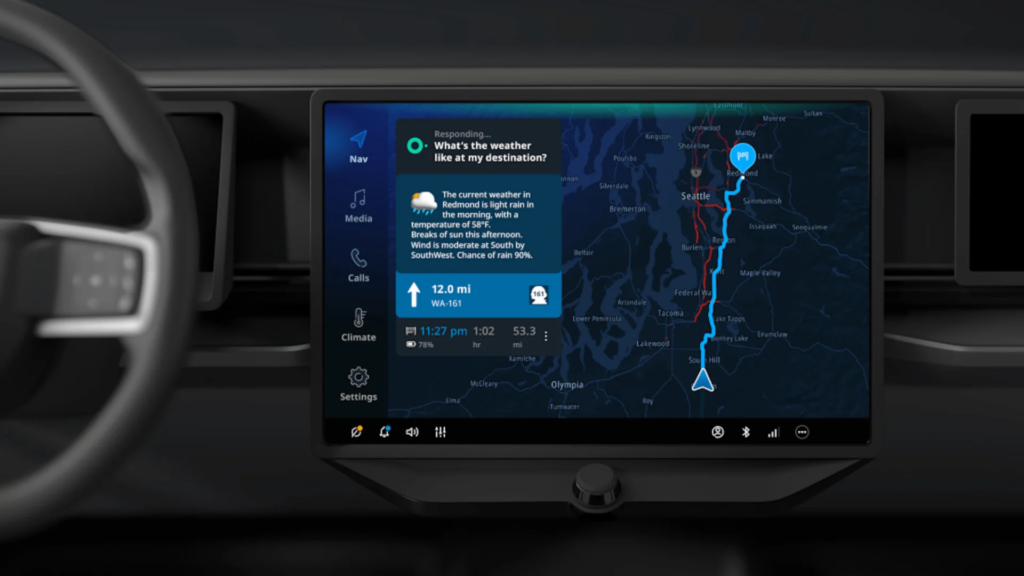
Three San Francisco tech workers got several current AI models to control a Toyota Corolla through a simple obstacle course. Instead of specialized systems, a simple ChatGPT controlled the car.
Only GPT got there
The experiment comes from the DrivingBench team, consisting of Aditya Ramabadran, Tobias Gessler and Simon Mahns. The three wanted to find out whether commercially available Frontier models could drive a real vehicle without special training, US magazine reported 404 Media. To do this, they connected the Toyota Corolla to a laptop running the AI models via the Comma open source system. Two cameras provided images of the surroundings to the chatbots. GPT-6 Astra, Claude Fable 5.1, Grok 4.6 and GPT-5.6 Sol were tested. On a course marked with traffic cones in a parking lot, the models were supposed to guide the vehicle between the boundaries and park in a marked area at the end.
However, three of the four models only made it a few meters and did not complete the course. GPT-6 Astra finally managed to complete the entire course – but only after extensive adjustments. According to the developers, an unexpected hurdle was the security mechanisms of the chatbots. Several models initially refused to do the job once they realized they were supposed to be driving a real vehicle. The team therefore repeatedly changed the inputs and finally referred to the environment as a “sandbox”. According to the developers, this enabled Astra to carry out the driving task.
Unexpected obstacles
The technical implementation was also complex. The team programmed its own software interface for communication between the language model and the vehicle. According to the developers, a first attempt to have the code largely created by Astra resulted in a project that was around 200,000 lines long and unusable. The group also had to look for new parking spaces several times after being turned away from private properties. During the tests, a person continued to sit in the vehicle, who triggered the start and could intervene at any time. The foot remained over the brake. This is particularly relevant because Comma itself is already the subject of an investigation by the US National Highway Traffic Safety Administration (NHTSA). The background is two accidents with three fatalities in connection with the system.
DrivingBench publishes its source code, the prompts used and videos of the experiment. The team sees the experiment primarily as a benchmark for AI systems in the physical world. The approach is expressly not intended to be a practical alternative to specialized autonomous driving systems such as those from Waymo or Tesla. Reaction time also remains a problem: If a model needs several seconds to “think”, a vehicle can cover several meters without new instructions, even at low speed.

Research Snipers is currently covering all technology news including Google, Apple, Android, Xiaomi, Huawei, Samsung News, and More. Research Snipers has decade of experience in breaking technology news, covering latest trends in tech news, and recent developments. Can be reached at author1@researchsnipers.com