MLM Software That Scales: Affiliate Programs, Pricing Traps, and Platform Migration in 2026
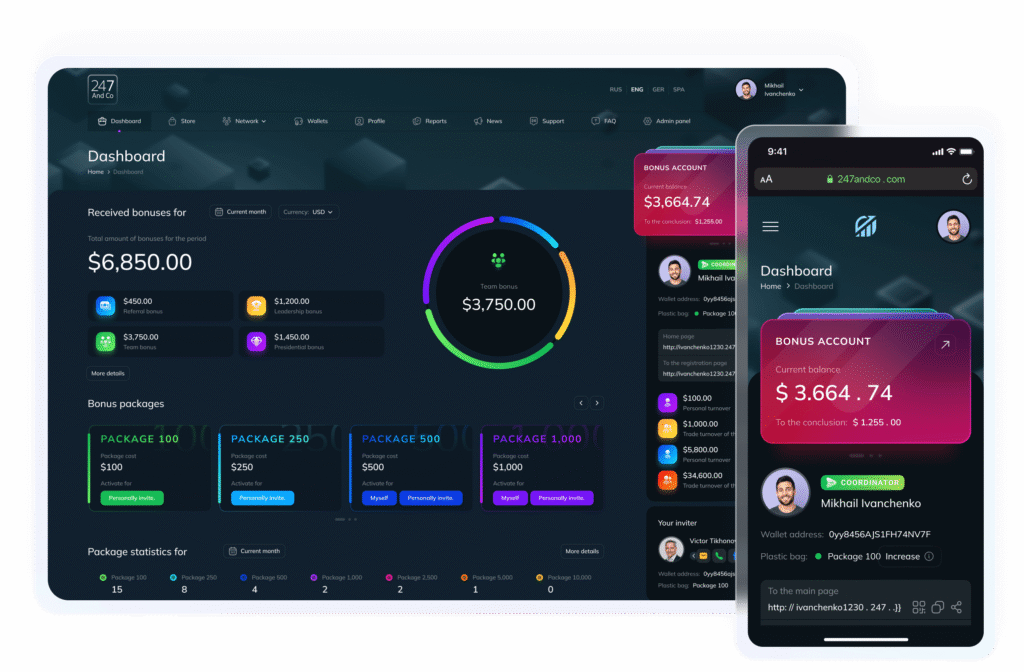
The most expensive MLM software decision a founder makes is not the first platform purchase. It is the second one. The migration from a starter platform to an enterprise system costs $15,000 to $80,000 in direct expenses and weeks of operational disruption. Across 83 rescue migration projects we have handled at FlawlessMLM since 2004, the average total waste from discarded code, departed distributors, and delayed launches reached $177,000 per company.
I wrote this article for founders who want to avoid that second purchase. The selection framework below covers how to evaluate MLM software, affiliate program software, and artificial intelligence MLM capabilities against the scaling requirements that most comparison articles ignore. The data comes from our internal project records across 400+ deployments and from verified market research.
The network marketing supplements sector drives a large share of MLM software demand globally. Health and wellness products make up roughly one-third of the $163.9 billion global direct selling market (WFDSA, December 2025 https://wfdsa.org/global-statistics/). Supplement companies are also the vertical most likely to hit scaling walls early because monthly autoship creates rapid partner-count growth that outpaces the engine capacity of starter platforms.
When MLM Platforms Break: The Scaling Timeline Nobody Publishes
Starter MLM platforms advertise speed and affordability. Both claims hold true at 500 to 5,000 partners. The trouble starts between 10,000 and 30,000 active distributors, where three things happen simultaneously: commission run times stretch from minutes to hours, genealogy tree views begin timing out in the partner portal, and support tickets related to payout errors multiply.
We documented this pattern across 34 migration projects in 2025. The degradation timeline is consistent regardless of the starter platform used.
| Active Partners | Commission Run Time | Dashboard Response | Payout-Related Tickets/Week |
|---|---|---|---|
| 5,000 | 3 to 4 minutes | Under 2 seconds | 0 to 2 |
| 15,000 | 8 to 12 minutes | 2 to 4 seconds | 5 to 8 |
| 30,000 | 25 to 45 minutes | 5 to 10 seconds | 15 to 25 |
| 50,000 | 60 to 120 minutes | 15 to 30 seconds | 30 to 50 |
| 100,000+ | 180+ minutes (unusable) | Frequent timeouts | 50 to 100 |
FlawlessMLM’s engine processes a full binary period close for 500,000+ partners in under 90 seconds. The architecture difference is not a feature difference. It is a design-philosophy difference. Starter platforms query the entire genealogy tree on every calculation. Enterprise engines shard the tree and compute commission runs in parallel. That architectural choice, made before the first line of code ships, determines whether the platform survives the 30,000-partner threshold.
“Every migration project follows the same arc. The founder bought a $5,000 platform because it looked identical to a $30,000 one in the demo. At 15,000 partners, commission runs started taking 30 minutes. At 30,000, the genealogy tree view crashed. By the time they called us, the field was losing trust and the operations team was working weekends to reconcile payouts manually. The rebuild costs more than doing it right from the start.” Ivan Shaulsky, Founder of FlawlessMLM, internal engineering review, March 2026
The Real Math Behind MLM Software Price
MLM software price has three visible tiers and two hidden costs that change the total-ownership calculation.
Visible tiers: white-label instances at $5,000 to $8,000 upfront with $200 to $800 monthly. Mid-market custom platforms at $15,000 to $40,000 upfront, $500 to $3,000 per month. Enterprise builds exceeding $150,000 with $3,000 to $10,000 monthly.
Hidden cost one: transaction fees. FlawlessMLM charges 0.5% on commissions processed. The market average sits at 1.5% to 2%. On $500,000 monthly commission volume, FlawlessMLM costs $2,500 per month. At 2%, the same volume costs $10,000 per month. Over 24 months, that $180,000 difference funds a full mid-market custom build.
Hidden cost two: change orders. Low-price MLM marketing software often locks the compensation plan to a fixed configuration. Every adjustment requires custom development at $3,000 to $8,000 per change. Growing networks adjust plans two to three times per year. By month 18, accumulated change orders can reach $30,000 to $50,000, erasing the savings from the low initial price. FlawlessMLM ships all plan changes through the admin panel. No code. No fees.
A third hidden cost appears only when the platform fails at scale: the migration itself. Our records show migration costs averaging $177,000 per company across 83 projects. That figure includes discarded code, the parallel-run period where both old and new platforms operate simultaneously, partner re-onboarding, and the distributor churn that inevitably accompanies a platform switch. We measured 15% to 25% partner attrition during active migrations, depending on how well the company communicated the transition to the field.
Binary, Unilevel, Matrix: Which Plans Scale and Which Stall
Plan type determines engine load. The choice of binary, unilevel, or matrix is not a marketing preference. It is an engineering constraint that affects commission processing speed, support overhead, and long-term scalability.
Binary MLM software splits every position into two legs with volume-matching bonuses. The engine must balance volumes across legs, calculate carry-forward amounts, and handle spillover for every partner in the tree. This is the highest-load plan type. Binary works well for health and wellness companies selling consumable products with a 30-day reorder cycle. The monthly purchase sustains commission flow. The two-leg structure stays simple for recruits to understand. But binary engines that are not purpose-built hit their limits faster than any other plan type.
Unilevel MLM software pays a percentage on each level with no width restriction. No legs to balance, no spillover rules, no volume matching. Commission calculations are level-by-level, which scales linearly with partner count rather than exponentially. Unilevel is the lowest-overhead plan type and the easiest to scale. Compression logic skips inactive levels so active leaders maintain their payout ratios.
Matrix MLM software locks the tree to a fixed width and depth. The spillover algorithm must be deterministic. Non-deterministic placement (where two identical actions produce different tree positions depending on server timing) erodes partner trust. Matrix plans cap growth by design. Once the matrix fills, the company must open a new matrix or adjust the dimensions. This makes matrix the hardest plan to scale past the initial fill cycle.
We recommend unilevel for SaaS and e-commerce companies where simplicity and scalability matter most. Binary for supplement and skincare brands where the reorder cycle supports volume flow. Matrix only when the company specifically wants to cap downline width and force depth. In my project experience, 60% of FlawlessMLM’s binary plan clients operate in the health and wellness vertical, 25% in cosmetics and personal care, and 15% in education and financial services. The plan type and the product vertical are tightly correlated. Ignoring that correlation costs founders 6 to 12 months of lost growth from plan-mismatch churn.
Affiliate Program Software Inside the MLM Platform: Why Separate Tools Cost More
The affiliate management platform market reached $2.06 billion in 2025 and is projected to hit $4.87 billion by 2031 at 15.4% CAGR (Mordor Intelligence, 2026 https://www.mordorintelligence.com/industry-reports/affiliate-marketing-software-market). Multi-tier affiliate programs drive the fastest-growing segment at 17.4% CAGR. That growth is pulling affiliate program software and MLM software into the same product category.
SaaS affiliate software handles single-tier recurring commissions. Affiliate tracking software attributes conversions across sessions. Referral software pays one commission per referral. A multi-level affiliate program adds genealogy logic, and at three tiers, the system is structurally identical to a unilevel MLM plan. Standard affiliate commission software breaks at this depth because it lacks the tree-calculation engine.
Running affiliate software for MLM alongside separate network marketing MLM software creates two databases, two commission runs, and two payout reconciliation processes. FlawlessMLM clients who consolidated both channels into one platform report 40% less reconciliation time per period (14 dual-channel deployments, Q4 2025 to Q1 2026). The partner portal software shows both channels in one interface. The commission tracking software applies different rules per channel against a single database.
A partner management system built for MLM handles the full scope: partner onboarding, tier assignment, multi-level commission logic, and performance reporting. Standalone partner management software handles onboarding but not payout math. A multi-tier affiliate program needs both layers. The best network marketing software in 2026 provides them in one platform.
The partner portal software quality inside that platform drives daily engagement. Over 70% of distributor logins in our analytics come from mobile devices. A partner portal that shows stale overnight batch numbers instead of real-time PV, GV, and rank data generates support tickets. Real-time data keeps distributors checking progress, sharing links, and recruiting. The MLM software affiliate program module must share the same real-time feed, so affiliate partners see their conversion stats update the moment a sale confirms.
Case Study: Migration from a Starter Platform at 22,000 Partners
A European skincare brand launched on a white-label MLM platform at $6,500. The binary plan worked well through the first year. At 8,000 partners, commission runs took 10 minutes. At 22,000 partners, runs exceeded 90 minutes and the genealogy tree view crashed for users with downlines larger than 5,000 positions. The operations team spent 12 to 15 hours per week on manual payout reconciliation caused by calculation errors.
The company migrated to FlawlessMLM in Q2 2025. The migration took 6 weeks, including a 2-week parallel-run period where both systems processed commissions simultaneously. After cutover, commission runs dropped to under 60 seconds. Support tickets related to payouts fell from 35 per week to 4 per week. Partner attrition during the transition was 11%, lower than our portfolio average of 15% to 25%, because the company communicated the switch three weeks in advance and offered a small loyalty bonus for partners who completed profile verification on the new platform.
Total migration cost including data extraction, re-mapping, parallel run, and partner communication: $38,000. The company estimated it had already spent $42,000 in change orders, overtime labor, and lost commissions on the starter platform over the prior 14 months. The lesson: the starter platform’s total cost of ownership exceeded the enterprise platform’s price before the migration even happened.
How Artificial Intelligence MLM Capabilities Extend Platform Life
AI inside the commission engine solves scaling problems that would otherwise force a platform switch. Three production applications matter. Predictive churn scoring flags at-risk partners 2 to 3 weeks before period close confirms the dropout. Fraud detection catches fake registrations and self-purchasing patterns that inflate partner counts and strain the engine. Plan modeling simulates compensation changes across the live genealogy tree in 30 minutes instead of two weeks of manual spreadsheet work.
Across three FlawlessMLM enterprise deployments measured in H1 2026, fraud detection reduced fraudulent payouts by 15% to 25% per period. Removing fraudulent accounts also reduced the effective partner count that the commission engine must process, which improves run time for every legitimate partner in the tree.
MLM multi level marketing software without AI capabilities pushes these problems onto the operations team: manual fraud review, reactive churn management, and spreadsheet-based plan modeling. Each of those manual processes breaks at scale. The operations team becomes the bottleneck, and the platform gets blamed for what is actually a missing intelligence layer. The network marketing affiliate program side suffers the same gap: without automated fraud detection, fake affiliate registrations inflate conversion numbers and corrupt commission pool integrity across both channels.
See the engine at your projected scale.
We load your compensation plan, simulate your partner count, and run commissions live. Free 30-minute session. No sales pitch. Calculate Your Project Cost Discuss Your Project
FAQ: MLM Software Scaling, Migration, and Affiliate Integration
How much does it cost to migrate from one MLM platform to another?
$15,000 to $80,000 in direct costs. Our average across 83 migration projects was $177,000 total waste including discarded code, distributor churn, and delayed launches. Starting on the right platform avoids this entirely.
At what partner count do MLM platforms start to break?
Most starter platforms degrade between 10,000 and 30,000 active distributors. Commission runs stretch to hours, genealogy views time out, and payout tickets multiply. FlawlessMLM’s engine handles 500,000+ partners in under 90 seconds.
Can I run both MLM and affiliate programs during a migration?
Yes. FlawlessMLM runs both channels from one system. During migration, we operate old and new platforms in parallel until commission calculations match to the penny. Both channels migrate together, preserving one partner database.
What is the real cost of cheap MLM software?
A $5,000 white-label plus change orders, high transaction fees, and eventual migration typically exceeds $100,000 over 24 months. A $30,000 mid-market platform with 0.5% transaction fees costs less over the same period.
Which MLM plan type scales best?
Unilevel scales with the lowest overhead: no leg balancing, no spillover, linear processing. Binary scales well for monthly-reorder products but needs a purpose-built engine. Matrix caps growth by design.
Does FlawlessMLM handle migrations from other vendors?
Yes. Over 80 migration projects since 2004. Full genealogy import, historical commission transfer, partner account migration, and a parallel-run phase until outputs match.
How does AI prevent the need for early migration?
AI handles churn prediction, fraud detection, and plan modeling inside the platform. These capabilities solve scaling bottlenecks that starter platforms push onto the operations team, extending platform life and preventing forced migrations.

Alexia is the author at Research Snipers covering all technology news including Google, Apple, Android, Xiaomi, Huawei, Samsung News, and More.