Musk data center operates gas turbines illegally, pollutes the environment
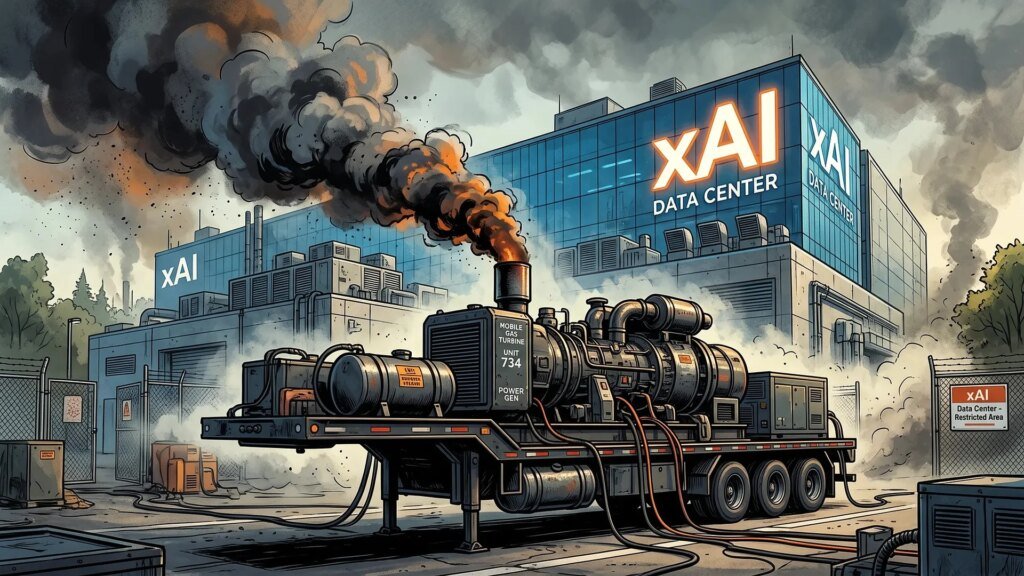
Elon Musk’s AI company xAI operates 59 gas turbines for the Colossus 2 data center without permission. Their emissions severely impact neighboring residential areas, but the US Department of Justice does not intervene, citing national security.
xAI operates 59 turbines illegally
Elon Musk’s xAI company uses 59 natural gas-powered turbines to power the Colossus 2 data center on the Tennessee-Mississippi border without the required environmental permits. The company has so far only stated the use of 27 systems. These have been running continuously since autumn 2025 to cover the high energy requirements of the AI servers. The turbines emit large amounts of pollutants: it is estimated that 30 of the units alone emit around 2,500 tons of nitrogen oxides and 4,000 tons of carbon monoxide annually. The facilities are located in close proximity to residential areas where predominantly black populations live. Local health data shows the areas already have rates of respiratory illnesses such as asthma above the regional average. Like the news agency Reuters writes in a report, the company is defending itself against a lawsuit from the civil rights organization NAACP. The plaintiffs are demanding an immediate stop to the facilities and fines of $124,000 (around 108,849 euros) per day. But so far it’s been a bit of a bummer, because the US Department of Justice intervened and asked for the lawsuit to be dismissed.
National security as an argument
The ministry justifies the intervention on national security grounds. The AI model Grok is used by the US military for tactical operations, which is why the undisturbed operation of Colossus 2 is a priority. The government argues it has the right to end citizen lawsuits under the Clean Air Act if doing so is contrary to the national interest. xAI and local environmental authorities argue that the trailer-mounted turbines are considered mobile units and are exempt from permit requirements. However, the Environmental Protection Agency (EPA) previously made it clear that temporary systems must also be certified if emissions limits are exceeded.
The authority is currently trying to play a backwards role and is examining new, more flexible rules for the industry. The conflict is only just beginning because, according to documents, the company is planning further investments in mobile gas turbines amounting to 2.8 billion dollars (around 2.46 billion euros). If the responsible court follows the Ministry of Justice’s argument, it would have far-reaching consequences. Residents would lose their most important legal tool to address local pollution if state authorities fail to act.