Starship V3: Start canceled shortly before launch, new attempt today
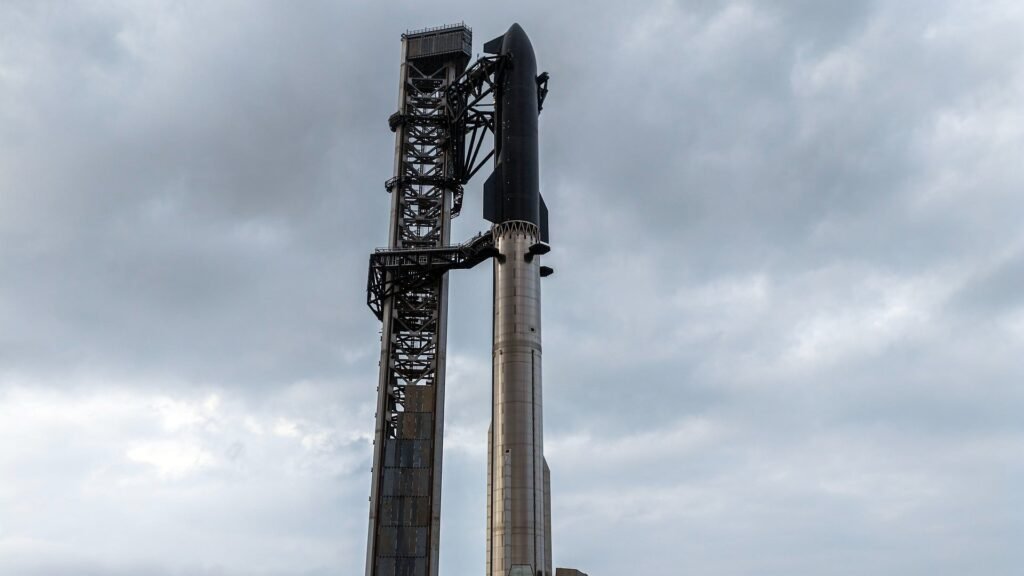
SpaceX had to cancel the first test flight of its new generation of rockets, Starship V3, at the last minute. A technical problem on the launch tower prevented the mission from starting. The next test for the giant rocket is scheduled for today.
Cancellation at the last minute
The space company SpaceX canceled the twelfth test flight – and the first of the new version – of its rocket on Thursday evening at the Starbase in Texas shortly before launch. At a countdown of 40 seconds, the systems stopped the process. The reason was a hydraulic pin on the starting tower that did not retract in time. A new attempt is planned for this Friday evening, provided the engineers can fix the problem with the launch system. The new generation Starship V3 is used for the first time in the mission. At 124 meters high, the aircraft is larger than its predecessors. It has 39 newly developed engines that are intended to provide more thrust. In addition, the drive system was revised and a reusable ring for step separation was permanently installed at the upper end.
Watch on YouTube
To increase reliability, SpaceX has made some technical adjustments. Key innovations include a modified satellite ejection mechanism, three larger grid fins for better control and anti-fuel leakage measures. 20 dummy satellites will be deployed on the flight in order to test the systems under real conditions in space.
Focus on reliability
As Ars Technica reports, the updated design aims to make the entire system fully reusable. So far, the company has only been able to successfully use the first rocket stage multiple times in previous test flights. However, no recovery is planned for the flight. Instead, both rocket stages should splash down in the ocean in a controlled manner. SpaceX has so far invested around 15 billion dollars (around 13 billion euros) in the rocket program. Last year, the space division recorded an operating loss of $656 million (around €565 million). The company’s own Starlink satellite network, however, brought in the majority of sales.

Priti Rajpoot is a technology journalist and contributor at ResearchSnipers, covering the latest in tech news, innovation, and digital trends across the world. From startups and AI to cybersecurity and consumer gadgets. She can be reached here: priti.r@researchsnipers.com