XRP Price Tracking in 2026: What Market Cap, Volume, and Supply Tell Crypto Traders
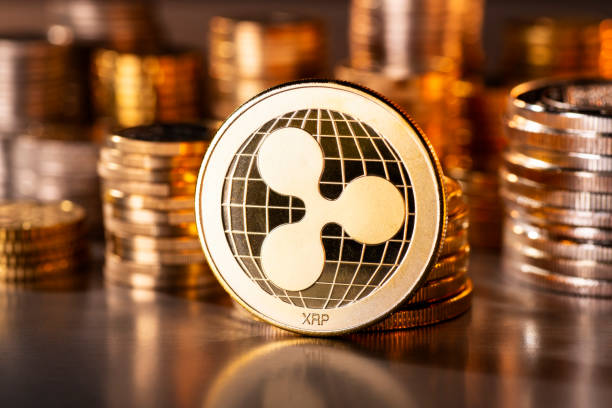
Most traders start by watching price. It’s the most visible number, the one that changes by the second, and the one that shows up first on every tracking app. But traders who rely on price alone are missing most of the picture.
Behind any price move is a set of underlying metrics that explain why it happened, how significant it really was, and what conditions might come next. For XRP in 2026, three of those metrics stand out above the rest: market cap, trading volume, and supply. Together, they tell a story that the price chart alone simply can’t.
Where XRP Stands in 2026
XRP has had a volatile year. It hit an all-time high of $3.65 in the early months of 2026, driven largely by the launch of spot XRP ETFs in the US toward the end of 2025. Since then, the market has pulled back significantly, and as of early June 2026, XRP is trading in the range of $1.12 to $1.17 on major exchanges, sitting at roughly $70 billion in market capitalization and ranked sixth globally among all cryptocurrencies.
Understanding what the price is only gets you so far. The three metrics below are what give that price number its actual context.
The Price High and the Pullback in Context
XRP’s drop from $3.65 to around $1.12 by early June 2026 looks dramatic in isolation. That’s a roughly 68% decline from peak. But without context, that number doesn’t tell you whether XRP is broken, consolidating, or presenting a different kind of opportunity.
That’s exactly what market cap, volume, and supply data help clarify.
What Market Cap Actually Tells You
Market cap is probably the most misunderstood metric in crypto. A lot of newer traders think it’s just a size indicator, but it’s more useful than that once you know how to read it.
How Market Cap Is Calculated
Market capitalization is simply the current price multiplied by the circulating supply. As of early June 2026, XRP’s circulating supply sits at approximately 62 billion tokens. At a price of around $1.12 to $1.17, that produces a market cap in the range of $69 to $73 billion.
What this number tells you is the total value the market is placing on all currently tradable XRP. It’s a measure of relative weight within the broader market.
Why Rank Matters More Than Raw Numbers
XRP’s sixth-place ranking by market cap means it’s one of the most established assets in the space, behind Bitcoin, Ethereum, and a small group of others. A high market cap asset like XRP generally attracts more institutional activity, carries more liquidity, and tends to be less susceptible to the sharp manipulation that hits smaller cap tokens.
Comparing XRP’s market cap to Bitcoin’s, which sits around $1.2 trillion as of this writing, also shows you something useful: XRP represents roughly 3% of the total crypto market cap. That dominance figure is a quick way to track whether XRP is gaining or losing ground relative to the overall market.
What Trading Volume Tells You
Volume is arguably the most actionable real-time signal a trader has access to. Price tells you where the market is. Volume tells you how much the market actually believes in that move.
Reading the 24-Hour Volume Number
XRP’s 24-hour trading volume as of early June 2026 is running between $1.8 and $2.2 billion across major exchanges. The most active trading pair remains XRP/USDT, with Binance alone generating over $130 million in that pair within a 24-hour window according to CoinGecko data.
When volume spikes on a price move, it suggests genuine market participation. When price moves on thin volume, the move is less reliable and more prone to reversal.
Volume and the ETF Effect
When the first US spot XRP price ETFs launched in November 2025, volume told a clear story. Canary Capital’s XRPC debuted on Nasdaq on November 13, 2025, going on to record the highest first-day trading volume of any ETF launch that year. Bitwise, Grayscale, and Franklin Templeton products followed in quick succession.
By January 2026, cumulative ETF inflows had surpassed $1 billion in less than two months, with not a single net outflow day recorded during that initial streak. Combined AUM across seven spot XRP ETF products now sits at approximately $1 billion as of June 2026. Volume data from the ETF market is now part of the monitoring toolkit for any serious XRP trader.
What Supply Data Tells You
XRP has one of the more distinctive supply structures in crypto. Understanding how it works changes the way you interpret price movements.
A Fixed Total, But a Managed Circulating Supply
The total XRP supply was fixed at 100 billion tokens at the network’s genesis in 2012. Unlike Bitcoin, which releases new supply gradually through mining, all XRP was pre-mined from day one. The entire 100 billion exists already.
What varies is how much is actually in circulation. In December 2017, Ripple locked 55 billion XRP into time-locked escrow contracts on the XRP Ledger. Up to 1 billion XRP is released from these escrow accounts each month. Historically, between 60% and 80% of each monthly release is re-locked into new escrow contracts, limiting the net increase in circulating supply.
As of June 2026, approximately 62 billion XRP are in circulation. Around 38 billion remain in Ripple’s escrow accounts, with the remainder either in Ripple’s operational wallets or destroyed through the network’s transaction burn mechanism, which has eliminated over 13 million tokens to date.
Why the Escrow Schedule Has Become “Priced In”
In earlier market cycles, monthly escrow releases caused noticeable price anxiety. Traders worried that Ripple was about to flood the market with supply. By 2026, that narrative has largely faded.
The monthly release schedule is publicly visible and well-documented. Markets anticipate it. And with institutional demand via ETFs absorbing a meaningful portion of available supply, the releases are no longer triggering the volatility they once did. On-chain data from early 2026 showed XRP held on exchanges at multi-year lows, a sign that circulating supply is being absorbed rather than sitting idle.
Putting the Three Metrics Together
No single metric gives a complete picture of what’s happening with XRP in 2026.
Here’s a quick summary of what each one tells you:
| Metric | What It Shows |
| Market cap | Relative size, institutional weight, market position |
| 24-hour volume | Liquidity, conviction behind price moves, activity level |
| Circulating supply | Available tokens, escrow dynamics, real-world demand pressure |
Watching all three together gives you a much clearer read on whether a price move is significant, whether institutional players are accumulating or reducing exposure, and whether supply dynamics are tightening or loosening.
Conclusion
Price is where attention naturally goes. But in 2026, with institutional capital flowing into XRP through ETFs, a closely managed supply schedule, and a market cap that places it among the top six assets globally, the surrounding data is where the real analysis happens.
Traders who understand what market cap, volume, and supply are communicating are working with a fuller picture. Those who watch only the price number are working with a fraction of the available information.
Frequently Asked Questions
What is XRP’s current market cap in 2026?
As of early June 2026, XRP’s market cap sits in the range of $69 to $73 billion, placing it sixth by market capitalization among all cryptocurrencies globally. This figure is calculated by multiplying the current price by the circulating supply of approximately 62 billion XRP.
What is XRP’s total and circulating supply?
XRP has a fixed maximum supply of 100 billion tokens, all of which were created at the network’s launch in 2012. As of June 2026, approximately 62 billion XRP are in circulation. The remaining supply is held in Ripple’s escrow accounts or operational wallets. Ripple releases up to 1 billion XRP from escrow each month, but typically re-locks between 60% and 80% of that amount into new escrow contracts.
Why does XRP trading volume matter for traders?
Volume tells you how much genuine market activity is behind a price move. A price increase on high volume suggests stronger conviction and broader participation. A move on thin volume is less reliable. For XRP specifically, tracking ETF inflows and outflows has become an additional layer of volume analysis given the launch of seven US spot ETFs in late 2025.
How did the XRP ETF launch affect the market in 2026?
The first US spot XRP ETF, Canary Capital’s XRPC, launched on Nasdaq on November 13, 2025, recording the highest first-day trading volume of any ETF product launched that year across all asset classes. Six additional spot products followed from Bitwise, Grayscale, Franklin Templeton, and others. Combined AUM across all seven products has reached approximately $1 billion as of June 2026.
Does Ripple’s monthly escrow release affect XRP’s price?
Historically, escrow releases caused some market concern around potential supply increases. By 2026, the schedule is widely understood and largely anticipated by the market. With institutional ETF demand absorbing a portion of released tokens and Ripple re-locking the majority of each monthly release, the supply impact has become more predictable and less disruptive to price than in previous market cycles.
What is the significance of XRP’s all-time high in 2026?
XRP reached an all-time high of $3.65 in early 2026, largely driven by institutional ETF inflows and improved regulatory clarity following the resolution of Ripple’s legal dispute with the SEC. As of early June 2026, XRP is trading roughly 68% below that peak. The distance from an ATH is often used to assess where an asset sits within its broader cycle, though no price prediction should be made from this figure alone.

Alexia is the author at Research Snipers covering all technology news including Google, Apple, Android, Xiaomi, Huawei, Samsung News, and More.












1 thought on “XRP Price Tracking in 2026: What Market Cap, Volume, and Supply Tell Crypto Traders”