6 Features That Make AI Glasses One of 2026’s Most Practical Wearables
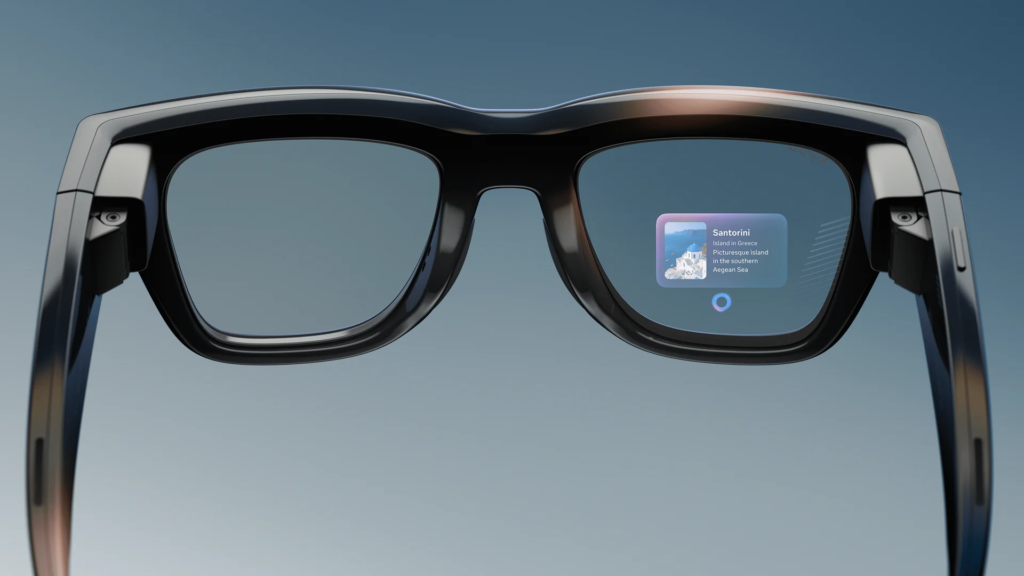
Most wearable technology launches with a long feature list and a short real-world use case. AI glasses have followed a different trajectory. The category has been building quietly for several years, resolving the design, comfort, and battery problems that held early versions back, and the result in 2026 is a device that earns its place in a daily carry through consistent practical utility rather than novelty. The smart glasses market reached USD 2.5 billion in 2025 and is projected to grow from USD 3.2 billion in 2026 to USD 14.4 billion by 2033, growing at a CAGR of 24.2%. That growth rate reflects real consumer and enterprise adoption rather than speculative forecasting, and the features driving it are worth understanding in specific terms rather than broad category descriptions.
A Built-In Camera That Captures What You Are Actually Looking At
The camera is the feature that separates AI glasses from every other wearable category, and the reason it matters is not photographic quality but perspective. A phone camera captures what you point it at. A camera in a pair of glasses captures what you are looking at, from eye level, at the moment you are looking at it, without any physical gesture that signals to the room that something is being recorded. That distinction produces footage that is qualitatively different from phone video: more honest, more present, and more reflective of the actual experience rather than a staged version of it.
The smart glasses market more than doubled with an increase of 110% year-over-year in the first half of 2025, with Meta accounting for 73% of sales, and a meaningful portion of that growth is being driven by the camera feature specifically, since it is the capability that most clearly differentiates the device from a smartwatch or a pair of wireless earbuds. The design of camera-equipped frames has also come a long way from the bulky, conspicuous hardware of earlier generations, and browsing something like Oakley glasses with camera alongside other current releases gives a reasonable sense of how far the category has moved in terms of making the camera invisible within the frame rather than the focal point of it.
Open-Ear Audio That Keeps You Connected Without Cutting You Off
Audio-enabled smart glasses held approximately 28% share of the broader smart eyewear market in 2025, which reflects how central the audio feature has become to everyday use rather than just specialist applications. Open-ear speakers built into the frame temples deliver calls, music, navigation, and AI assistant responses without anything inserted into or clamped over the ear. The practical value of this goes beyond comfort. A person wearing AI glasses can hear a call come through, decide whether to take it, and respond without reaching for their phone or removing earbuds from a bag. More importantly, they stay acoustically aware of their environment throughout, which is a safety consideration that noise-cancelling earbuds cannot accommodate. For anyone who spends meaningful time outdoors, in transit, or in shared workspaces where awareness of what is happening around you is part of how you function, open-ear audio through smart glasses is a genuinely different proposition from in-ear audio.
An AI Assistant That Can See What You Are Looking At
The AI assistant in smart glasses is not the same as the AI assistant on a phone, and the difference is the camera. Voice-based AI on a phone responds to what you say. The AI assistant in smart glasses can respond to what you say and what you are looking at simultaneously, which enables a category of query that voice-only assistants cannot handle. Asking what a sign says, identifying an object in your field of view, getting real-time information about something in your immediate environment: these are interactions that require visual context, and smart glasses provide it without requiring the user to photograph anything or describe what they are looking at. Meta Ray-Ban’s Live AI feature, which enables wearers to ask their glasses questions about their visual environment in real time, was used by more than 18 million unique users within its first six months of release. That adoption rate reflects genuine utility rather than novelty, and it gives a concrete picture of how the context-aware AI assistant feature is being used across a real consumer base.
A Form Factor That Has Finally Resolved the Wearability Problem
The history of smart glasses is largely a history of devices that people tried and stopped wearing because they were uncomfortable, conspicuous, or both. The current generation has addressed both problems more effectively than any previous iteration. The convergence of sub-20-gram frame weight targets, all-day battery performance, and stylish industrial design partnerships has resolved the longstanding wearability gap that historically constrained adoption. Frames that weigh under 50 grams, sit on the face the way regular eyewear does, and do not visually announce themselves as technology in a room full of people have changed what consistent daily wear looks like for this category. The consumer who wears AI glasses for a full day without thinking about them is the consumer who keeps wearing them, and the design work that has gone into the current generation has made that outcome achievable in a way that earlier versions, regardless of their feature sets, never managed.
Real-Time Translation Without a Phone in Hand
Real-time translation through smart glasses is one of the features that tends to surprise people most when they encounter it in practice. The combination of open-ear audio, a microphone, and an AI model running on or connected to the device produces a translation experience that is meaningfully different from holding up a phone: the translation arrives in your ear, your hands remain free, and the conversation continues without the social disruption of a visible device between the two people talking. For business travel, international work contexts, and any situation where language is a practical barrier rather than an occasional inconvenience, this feature moves smart glasses from a nice-to-have device into a genuinely useful professional tool. AI-enabled real-time translation became one of the most requested consumer features in premium smart eyewear products during 2025, which reflects both how widely the feature is being adopted and how consistently it is delivering results that users want to continue using rather than returning to phone-based alternatives.
Battery and Connectivity That Have Caught Up With the Use Case
Early smart glasses were limited by battery life that could not sustain a full day of use and connectivity that depended heavily on proximity to a phone. Both have improved substantially in the current generation. Most premium AI glasses in 2026 support several hours of active use across their main features, with standby modes that extend the functional window through a working day. Bluetooth and in some models direct cellular connectivity mean the glasses operate independently rather than as an accessory that degrades when the phone is across the room or out of battery. Entry-level AI audio glasses without a display now retail below USD 299, while premium AR overlay models are converging toward the USD 799 to USD 1,499 band by 2026, which means the price-to-capability ratio has improved to the point where the purchase decision is increasingly about use case fit rather than whether the technology is mature enough to be worth buying. For most practical daily use scenarios, the answer to that second question is now clearly yes.
Conclusion
The features that make AI glasses practical in 2026 are not individually unprecedented. Cameras, audio, AI assistants, and translation tools all exist in other devices. What is different about AI glasses is the combination: all of these capabilities in a single object that is worn rather than carried, that captures what you are looking at rather than what you point at it, and that keeps both hands free and both ears open throughout the day. The wearable category has produced a lot of devices that added technology to an object without meaningfully changing what the object could do for the person wearing it. AI glasses, in their current form, have cleared that bar, and the market numbers reflect a consumer base that is arriving at the same conclusion independently.

Alexia is the author at Research Snipers covering all technology news including Google, Apple, Android, Xiaomi, Huawei, Samsung News, and More.