Boost Performance with a Smart Small Home Gym Setup
You wake up at 6 AM, check your calendar, and realize there’s no window for the gym today—again. Between back-to-back meetings, family obligations, and a commute that eats into your evening, finding sixty minutes for a proper workout feels impossible. When you do make it to the gym, you’re battling for equipment, waiting in line for a squat rack, and spending more time transitioning between machines than actually training. This cycle of inconsistency kills momentum and stalls progress.
The solution isn’t working out more—it’s working out smarter, closer to home. A strategically designed small home gym setup, enhanced with connected technology, eliminates commute time, removes scheduling friction, and delivers focused, data-driven sessions in half the time. In this guide, you’ll discover how to plan an efficient layout that maximizes limited square footage, select smart equipment that automates tracking and personalizes your training, structure effective weight sessions for compact spaces, leverage performance assessment tools to ensure continuous improvement, and build workout routines that fit seamlessly into a demanding professional schedule.
The Foundation: Planning Your Optimal Small Home Gym Layout
Every effective small home gym setup starts with an honest space assessment. Grab a tape measure and map your available area—whether it’s a garage corner, spare bedroom, or basement section. You need a minimum of 6×6 feet for bodyweight work, but 8×10 feet opens up serious training possibilities. Once you know your dimensions, divide the space into functional zones: a strength area near a wall for stability, an open center for dynamic movements, and a corner for cardio equipment.
Flooring comes first in execution. Rubber interlocking tiles protect your subfloor, reduce noise, and provide stable footing for heavy lifts. Ventilation matters more than most people realize—a single fan or cracked window prevents overheating and keeps sessions productive. For storage, think vertical: wall-mounted racks, pegboards for bands, and ceiling hooks for suspension trainers keep your floor clear and transitions between exercises fast. Safety requires maintaining at least two feet of clearance around any equipment with moving parts. This intentional zoning approach transforms a cramped room into a purpose-built training environment where every square foot serves your fitness goals.
Investing in Smart Gym Equipment for Maximum Efficiency
When every minute counts, smart gym equipment bridges the gap between a quick session and a productive one. Traditional home gym gear requires you to manually track sets, guess at progressive overload, and rely on memory for workout history. Connected fitness devices eliminate this cognitive overhead by automating the data collection process and delivering actionable feedback in real time. The result is shorter sessions that produce better outcomes because every rep is optimized.
When evaluating smart equipment for a compact space, prioritize three criteria. First, connectivity—the device should sync seamlessly with your phone or a centralized fitness platform so your data lives in one place. Second, footprint versatility—choose equipment that serves multiple training purposes without demanding dedicated floor space. Third, adaptive intelligence—the best smart devices adjust resistance, suggest modifications, or flag fatigue patterns based on your accumulated performance data. This combination ensures you’re not just collecting numbers but actually using them to train more effectively within tight time constraints.
Essential Smart Devices for a Compact Home Gym
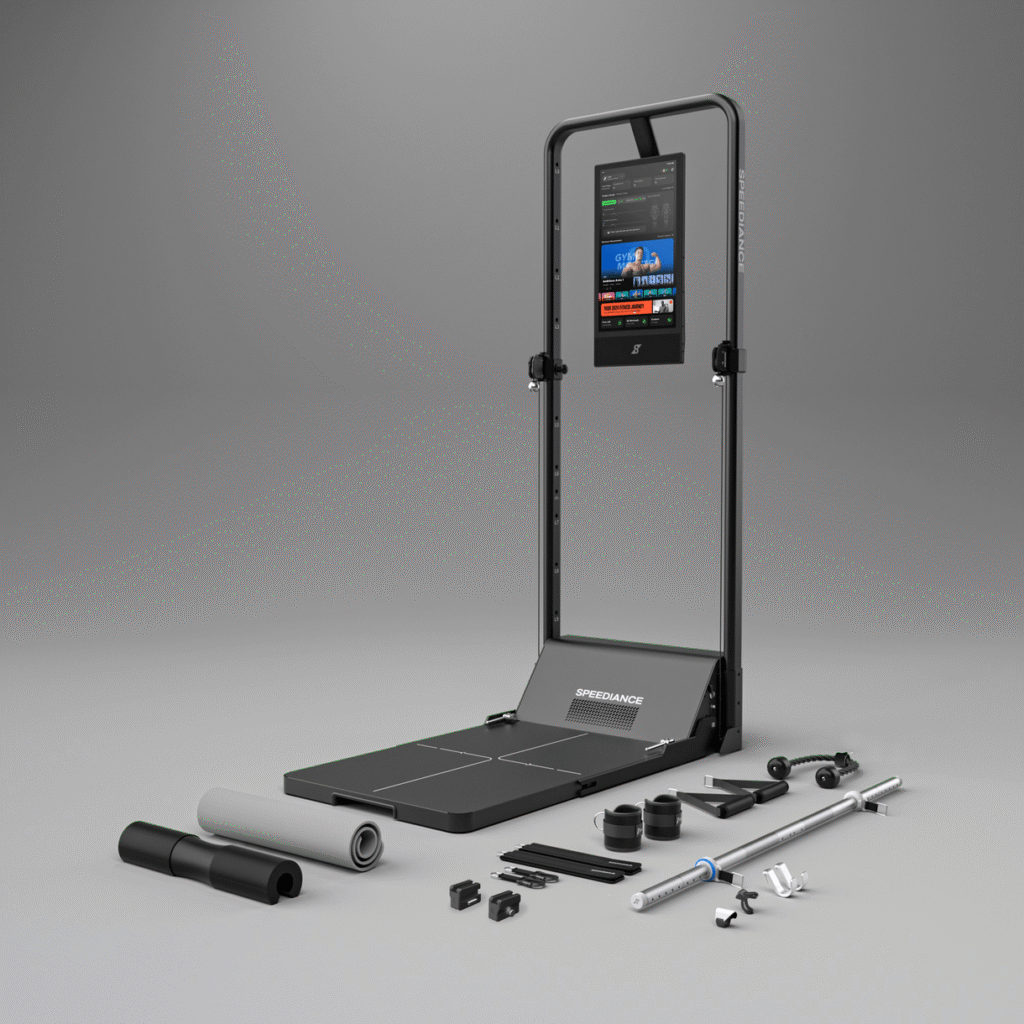
Connected adjustable dumbbells replace an entire rack while logging weight selections automatically. Smart resistance bands with embedded sensors measure force output and rep tempo through companion apps. All-in-one smart gym systems like Speediance consolidate multiple cable-based exercises into a single compact unit with digital resistance and built-in performance tracking, making them particularly well-suited for small home gym layout configurations. Interactive fitness mirrors transform a blank wall into a guided training studio with live form correction. Each device pairs with platforms that deliver structured programming, so you step into your gym and start working immediately—no planning required.
How Smart Equipment Saves Time and Enhances Workouts
The practical time savings compound quickly. Automated workout logging means you never pause to scribble in a notebook or scroll through spreadsheets—your sets, reps, and loads are captured instantly. Real-time form feedback from motion sensors or camera-based systems corrects movement errors mid-set, reducing injury risk and eliminating wasted reps that don’t target the intended muscle. Personalized adjustments happen session to session: if your data shows you recovered well and hit all targets last workout, the system nudges intensity upward. If strain metrics suggest fatigue, it dials back volume before you overtrain. For busy professionals, this means walking into a ten-by-eight-foot room and executing a precisely calibrated thirty-minute session without a single decision beyond showing up.
Effective Weight Training in a Compact Space
Weight training delivers the highest return on time investment for body composition and functional strength, but it demands respect for spatial limitations. In a small home gym setup, the key is selecting equipment that collapses, folds, or serves double duty. A foldable weight bench stores flat against a wall when not in use and opens up your entire floor for standing exercises. A half rack or squat stand with safety arms provides the security of a full power cage at roughly half the footprint—bolt it to the wall for additional stability. Plate-loaded systems with standard Olympic plates let you scale from light warm-ups to heavy working sets without needing multiple machines.
Safety becomes non-negotiable when you’re lifting without a spotter in confined quarters. Position your rack so the barbell path never intersects with walls, shelves, or low ceilings. Set safety pins at the correct bail-out height before every heavy set. Use bumper plates if your floor and neighbors can tolerate controlled drops, and always verify overhead clearance before pressing movements. With these precautions addressed, a compact weight training area becomes just as effective as a commercial gym floor.
Key Weight Training Exercises for Small Home Gyms
Compound movements reign supreme when space and equipment are limited. Front squats and goblet squats require minimal backward movement compared to back squats, making them ideal for tight setups. Floor presses substitute for bench presses when ceiling height restricts a full rack, and they build lockout strength effectively. Romanian deadlifts, overhead presses, bent-over rows, and lunges all operate within a two-by-four-foot standing footprint. Prioritize these multi-joint exercises because they recruit more muscle mass per rep, generate greater hormonal response, and accomplish in four movements what isolation routines need twelve machines to achieve.
Structuring Time-Efficient Weight Sessions
Supersets pair opposing muscle groups—like pressing with rowing—so one area recovers while the other works, cutting rest periods without sacrificing performance. Circuit formats rotate through three to five exercises with minimal transition, keeping heart rate elevated and condensing a full-body session into twenty-five minutes. For professionals with unpredictable schedules, an EMOM (every minute on the minute) structure provides built-in pacing: perform a set number of reps at the top of each minute and rest for whatever time remains. This approach guarantees workout density stays high regardless of whether you have twenty minutes or forty, and smart equipment tracking confirms you’re maintaining progressive overload across these compressed formats.
Leveraging Performance Assessment to Track Progress
Training without tracking is guessing—and busy professionals don’t have time to guess. Performance assessment transforms your small home gym setup from a place where you exercise into a system that produces measurable, compounding results. Without objective data, you can’t distinguish a productive training block from a stagnant one until weeks of effort have already been wasted. The right tracking tools close this feedback loop instantly, showing you exactly where you’re improving and where adjustments are needed.
Start by establishing baseline benchmarks during your first week: record your working weights for primary lifts, measure resting heart rate each morning, and note how many quality reps you complete before form breaks down. Wearable fitness trackers capture heart rate variability, sleep quality, and recovery readiness—metrics that tell you whether today calls for intensity or active recovery. Smart scales track body composition trends over weeks rather than fixating on daily weight fluctuations. Fitness apps aggregate all this information into dashboards where patterns emerge clearly. Review your data weekly in a five-minute session: identify which exercises saw load or rep increases, flag any movements where progress stalled, and adjust the following week’s programming accordingly. This structured approach to performance assessment ensures that every session in your compact gym drives you toward specific, quantifiable goals rather than simply burning calories without direction.
Designing Workout Routines for Busy Professionals
The best workout routines for busy professionals share three characteristics: they’re short enough to fit between commitments, structured enough to eliminate decision fatigue, and adaptable enough to scale with energy levels on any given day. When your small home gym setup includes smart equipment and performance tracking, your routines become living programs that evolve with you rather than static plans you outgrow or abandon. The goal isn’t to replicate a ninety-minute bodybuilding split—it’s to extract maximum physiological stimulus from focused twenty-to-thirty-minute sessions performed consistently four to five days per week.
Build your weekly framework around movement patterns rather than body parts. Dedicate two days to push-and-pull strength combinations, two days to lower body and core work, and one day to active recovery or mobility. This pattern ensures balanced development while allowing enough frequency to drive adaptation. Smart equipment makes this approach seamless by queuing up the correct routine based on your schedule, adjusting loads from your last session’s data, and confirming you’ve hit sufficient weekly volume across all major movement categories.
Sample Time-Efficient Workout Plans
A thirty-minute full-body session might open with two minutes of dynamic warm-up, move into a superset of goblet squats paired with push-ups for four rounds, transition to Romanian deadlifts paired with band-assisted rows for four rounds, and finish with a three-minute core circuit. Total working time stays under twenty-five minutes with built-in rest. For days when only fifteen minutes exist, an EMOM format using just two compound exercises—like kettlebell swings and overhead presses—delivers surprising training density. Schedule these sessions as non-negotiable calendar blocks, treat them like meetings, and let your smart system confirm completion so consistency becomes visible and motivating.
Integrating Performance Tracking into Daily Routines
Embed tracking into your workflow rather than treating it as a separate task. Morning readiness checks take thirty seconds with a wearable that reports sleep quality and recovery score—this determines whether you train heavy or light. During sessions, smart equipment logs everything automatically, so your only job is executing. Post-workout, spend sixty seconds reviewing the session summary your app generates: total volume lifted, average rep tempo, and any flagged form deviations. Weekly, a five-minute dashboard review reveals trends that inform next week’s programming adjustments. This minimal-effort tracking habit transforms raw data into continuous improvement without adding another chore to your schedule.
Build Your Smart Home Gym System and Start Training Today
Building a high-performance small home gym setup isn’t about recreating a commercial facility in your spare room—it’s about engineering a system that removes every barrier between you and consistent training. A thoughtfully zoned layout turns limited square footage into a purpose-built environment. Smart gym equipment automates the mental work of tracking, adjusting, and programming so you focus entirely on execution. Efficient weight training techniques like supersets and EMOM formats compress meaningful stimulus into sessions that fit between morning coffee and your first meeting. Performance assessment closes the feedback loop, ensuring every week builds on the last with objective data rather than guesswork. And tailored workout routines designed around movement patterns keep you progressing without demanding hours you don’t have.
The compound effect of these elements is transformative: you reclaim five to seven hours weekly in eliminated commute and wait times, train with greater precision than most commercial gym-goers, and build a sustainable habit that adapts to your life rather than competing with it. Start this week—measure your space, identify one piece of smart equipment that fits your goals, and schedule your first three sessions as fixed appointments. Consistency in a well-designed system always beats sporadic effort in a perfect facility.

Alexia is the author at Research Snipers covering all technology news including Google, Apple, Android, Xiaomi, Huawei, Samsung News, and More.