5 Reasons Large Format Lenticular Printing Commands Attention In Any Space
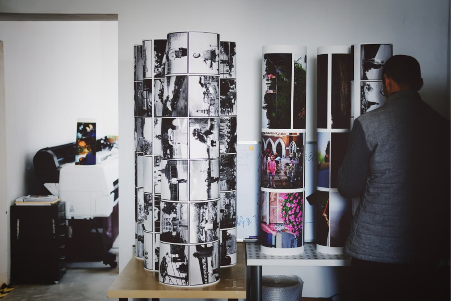
Imagine the following: a booth, storefront, or lobby wall that appears to be one of a hundred in the area. The individuals who a brand desires the most are the ones who pass by without even glancing at it. In a market of level, bland graphics, it is no quicker than fading into obscurity.
The solution is not an increased budget and more colorful graphics. It’s a display that actually moves as an audience does. It is precisely what makes large format lenticular printing such a difference-maker to brands that need to compete with each other in crowded, visually cluttered areas. So, what makes a print a real crowd magnet? The following points are listed one by one, so that one can easily understand the way each piece fits.
1. Interrupts the Autopilot Most People Walk On
Among the many signage options available today, large format lenticular printing grabs attention using motion and depth. A two-dimensional graphic cannot mimic that effect. The image changes as one passes in front of a lenticular panel. It turns, or it seems to fly up out of the surface. The entire issue is that half a second of indecision causes people to freeze in their tracks just to think about what they perceived. The trick is that most real-life settings become indistinct: lines of stagnant signs, print banners, matte posters which all begin to resemble each other. Lenticular fissures that pattern immediately in places such as:
- Retail aisles
- Airport terminals
- Convention hall walkways
No moving parts. No screen. No power cord is required.
2. Holds Attention the Way a Screen Does
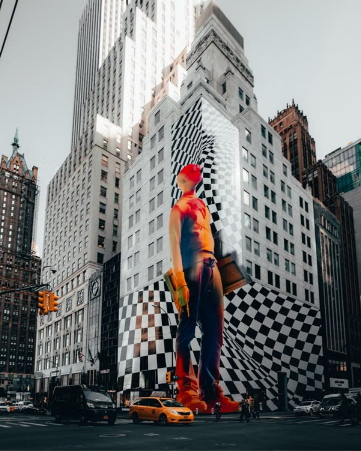
This is one of the largest myths in marketing, and it is believed that digital always prevails. That isn’t accurate. In a 2025 review in the Journal of Experimental Psychology: Human Perception and Performance, abrupt visual change was discovered to reliably draw the eye, rather than screens. Lenticular graphics are based on that very mechanism. The revelation can only occur as a viewer passes through the panel, and therefore, the format inherently delays the gaze by a beat more than a printed poster does on its own. It, in essence, competes with animated digital signage, but without the hardware.
3. Re-Triggers Attention Instead of Letting It Fade
The majority of graphics have one viewing, and the viewer never visits the graphics again. Lenticular doesn’t fade that quickly, since the image isn’t finished revealing itself after the first look. Take one step left or right, and the panel moves once again, returning the same interest that drew somebody in initially. This is supported by industry studies: consumers who remember an out-of-home ad also claim to take action following the advertisement, as per a 2025 industry survey reported by Digital Signage Today. It is a wall-wide lenticular panel which produces the same effect of a repeat glance, and which requires no sensor, screen, or soundtrack to operate.
4. Grabs Attention the Same Way in Any Setting
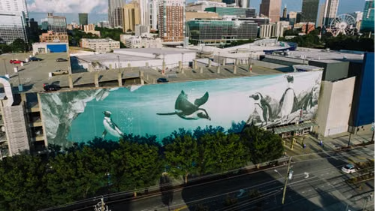
There are too many eye-catching formats that can only work in one space. What may be a hit in a retail display window may be a bomb in a lobby. Lenticulars do not have the same problem, as the object of interest is movement, not the space surrounding it. Such consistency is reflected in formats monitored throughout the industry, such as:
- Transit displays and billboards.
- In-store windows and point of purchase displays.
- Lobby walls and trade show backdrops.
In the year 2025, spending continued to increase in almost all of these formats (according to the Out of Home Advertising Association of America), a phenomenon that suggests that attention-seeking real-world images can be easily transported across environments. The eye first responds to the motion and then to the environment, regardless of the size of the panel: five feet or eight.
5. Holds Attention Long Enough to Actually Register
It is not difficult to get a glimpse. It is more difficult to hold on long enough to make the brain process what it saw, and that is the actual challenge of good attention. Out-of-home visuals are always remembered and noticed by consumers compared to most other types of advertisements that they encounter on a normal day. Lenticulars are virtually brushed past that same bar, as the movement or reversal only occurs when a person ceases moving their eyes beyond it. That helps to sieve out the people who just pass by.
Conclusion
Therefore, be it halting the foot traffic in a retail store, setting up a trade show booth, or providing a lobby wall with some character, the throughline remains the same. Motion and depth draw the eye in a manner that cannot be done with a flat print and then continues to capture the eye anew each time somebody changes his angle. There are five ways to box on the large format lenticular printing checks, namely, first contact, real staying power, repeat curiosity, cross-environment consistency and attention that actually registers. It is that combination that makes it so many brands turn to it rather than a more static sign.

Alexia is the author at Research Snipers covering all technology news including Google, Apple, Android, Xiaomi, Huawei, Samsung News, and More.