Google I/O 2026: The most important announcements at a glance
At the start of the I/O 2026 developer conference, Google made it clear where the journey is headed: away from classic search results towards “agentic” AI that takes on tasks independently – and should be embedded everywhere, from YouTube to Maps to Docs.
A pretty boring start
This year, however, it must also be said that the innovations that await us in Germany or in Europe in general are limited and basically the start to Google I/O this year was a bit boring. In addition to the sometimes quite impressive demo scenarios on the Google stage, it becomes clear that many things will initially only be activated for users in the USA or a few selected markets such as India. Google I/O 2026: This is how Google wants to improve web search with AI
Search in the Agentic Era
Google announced a redefinition of “Google Search” and this is probably something that will affect most users because they will soon see it every time they start a Google search. The classic search term is increasingly being dissolved in favor of AI agents that track, contextualize and proactively inform topics over the long term. In the “AI mode” search, users can create so-called information agents who deal with a topic in the background over a longer period of time – such as a planned trip, a political process or a technological development. These agents are intended not only to provide individual answers, but also to synthesize information from multiple sources, compare explanations, and provide recommendations for action.
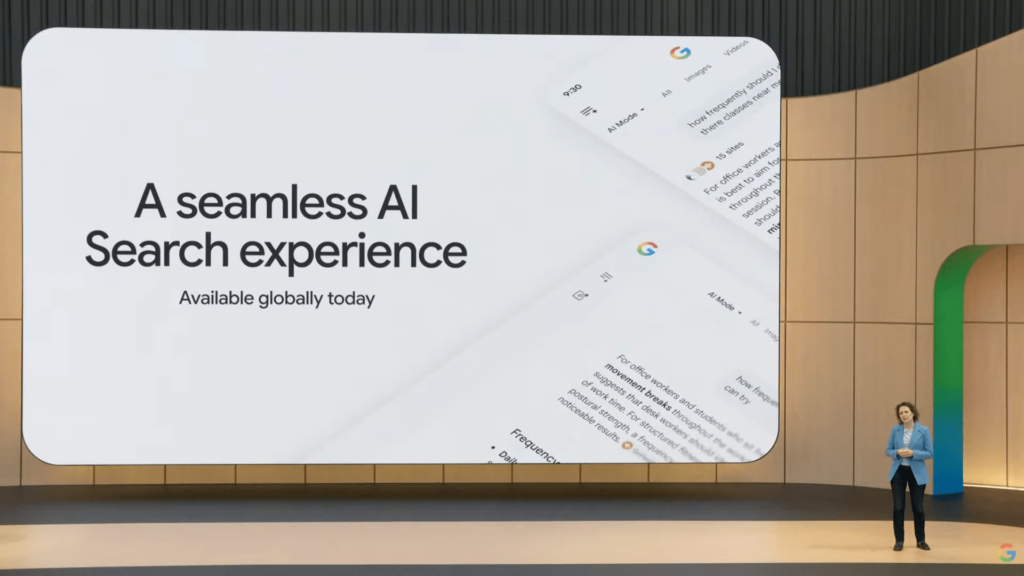
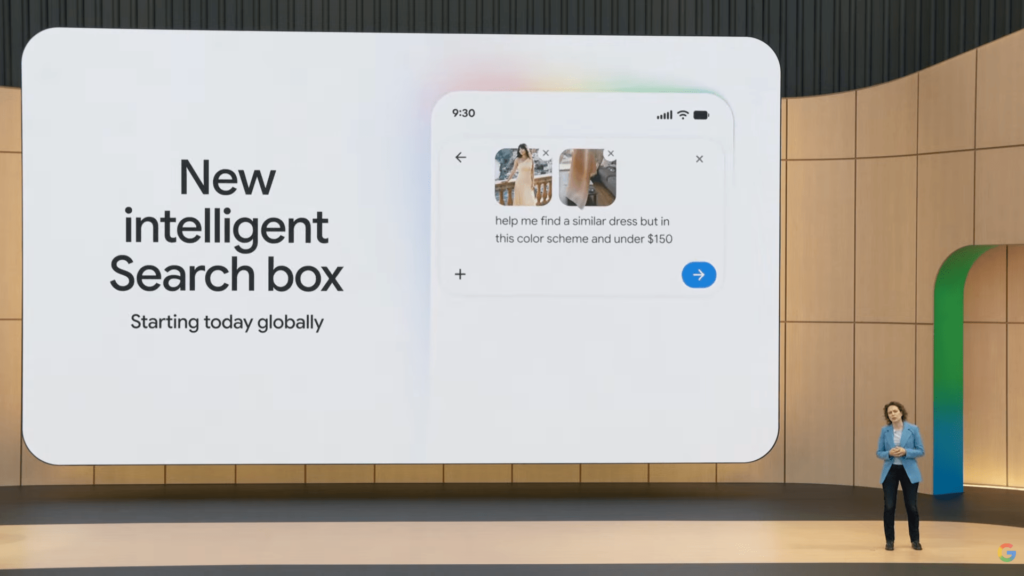
However, there are several restrictions on the launch. A number of the agent functions will initially only launch for Google AI Pro or Ultra subscribers – and initially only in the USA, before they will later be available in other regions. For European users, this means: a large part of the new “search future” remains purely a dream of the future for the time being. Google I/O 2026: Google presents Gemini Omni in the video
Gemini 3.5 Flash, Gemini Spark and Gemini Omni
The Google AI platform Gemini is getting an upgrade in several layers with I/O 2026:
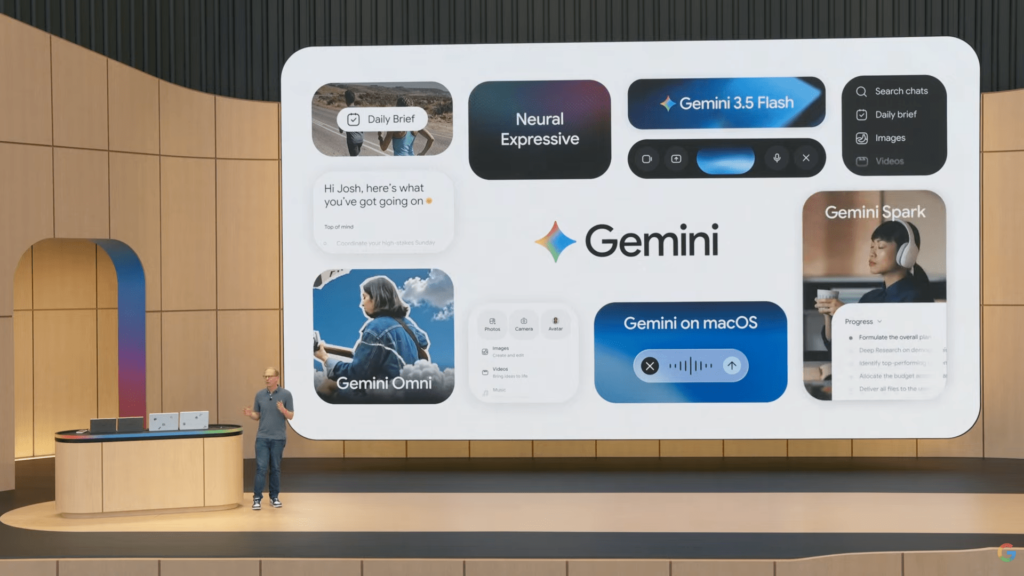
- Gemini 3.5 Flash is intended to serve as a fast, affordable base instance for agent workloads. According to Google, it’s closer in performance to Gemini Pro, but significantly cheaper and faster – ideal for automations, APIs and constant background agents.
- Gemini Spark is the new “agent layer”: Here, users build their own AI agents that carry out tasks across multiple services – such as planning trips, organizing appointments or coordinating multiple apps.
- Gemini Omni represents the next generation of multimodal AI that combines text, image and video in one model. Gemini Omni is able to create various output formats from any input, initially with video. Gemini Omni Flash is therefore also being introduced free of charge for YouTube Shorts and YouTube Create.
More in the Gemini app
Gemini becomes an even more helpful AI assistant with a new, intuitive interface, proactive daily briefings and Gemini Spark, a 24/7 agent to help get tasks done. There is also a new macOS app in which Gemini Spark runs locally on the computer and is expanded to include powerful language functions. The new Agent Daily Brief provides a personalized overview in the app in the morning that is tailored precisely to your daily needs. The new Neural Expressive design language is now available worldwide all on the web as well as on Android and iOS available.

New SynthID: AI protection with more partners
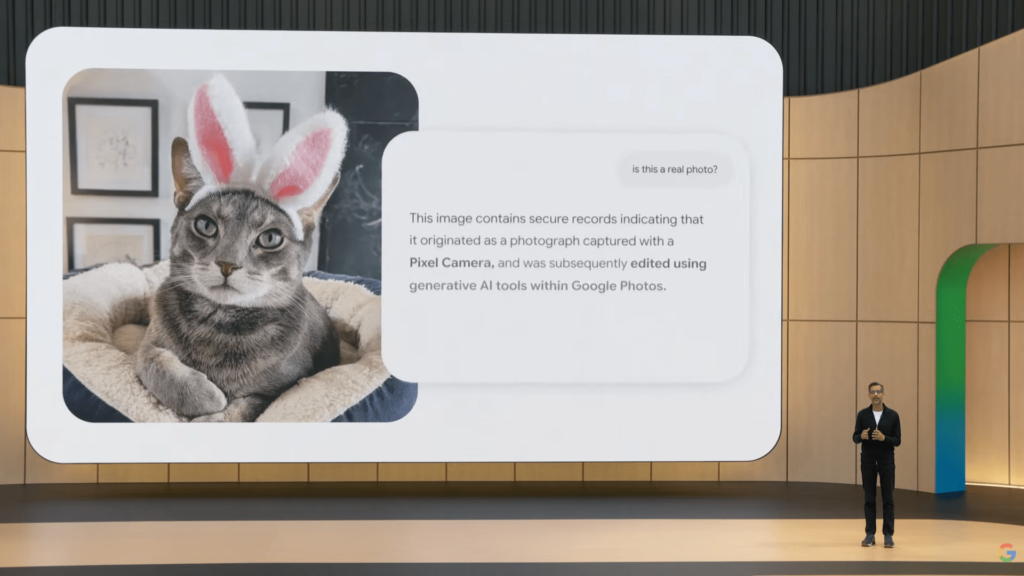
When it comes to media literacy, SynthID, Google’s technology, helps to label and recognize AI content. The improved version was now shown at I/O 2026, with improved algorithms to identify deepfakes. Google is now starting to increasingly collaborate with media and platforms to spread this type of watermark system.
“Ask” everywhere: Maps, YouTube, Docs and more
Google is now relying on the idea of installing “Ask”, i.e. “questions”, everywhere: This starts AI assistance directly in the respective services. In Maps, for example, an AI could proactively suggest routes, public transport options and offers around your destination. In YouTube the idea is that you e.g. For example, you can say “Show me only the most important 5 minutes of this video” and the AI will automatically filter out or summarize the appropriate parts. In Docs, Sheets and Gmail, AI agents should independently add forms, write templates, summarize data or prioritize emails. The bad news: Again, the rollout strategy is noticeably USA-centric. Many of these new AI features are initially launching only for Plus and Pro users in the United States; other regions will have to wait and see.
Future to put on: Smart glasses with Android XR
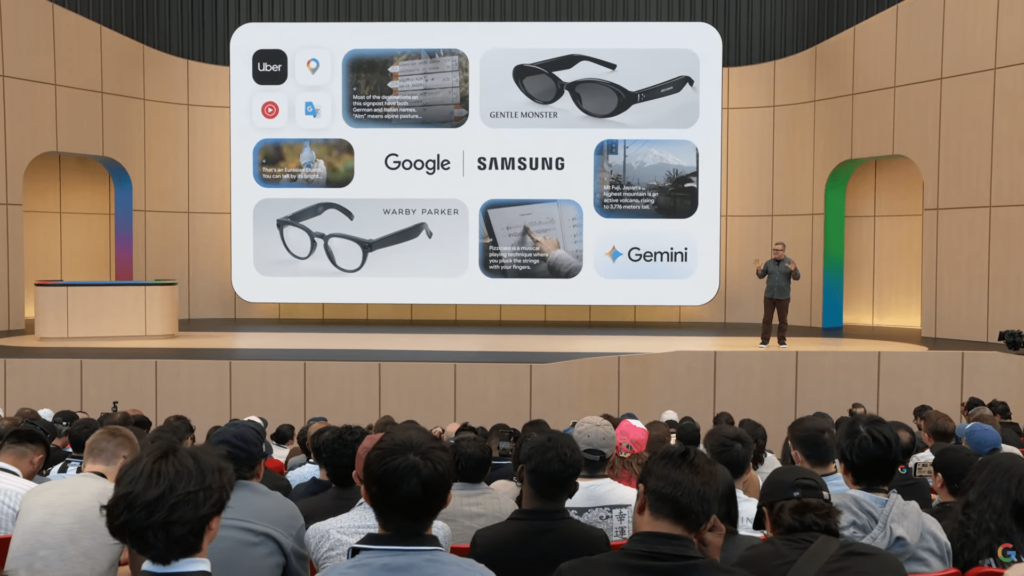
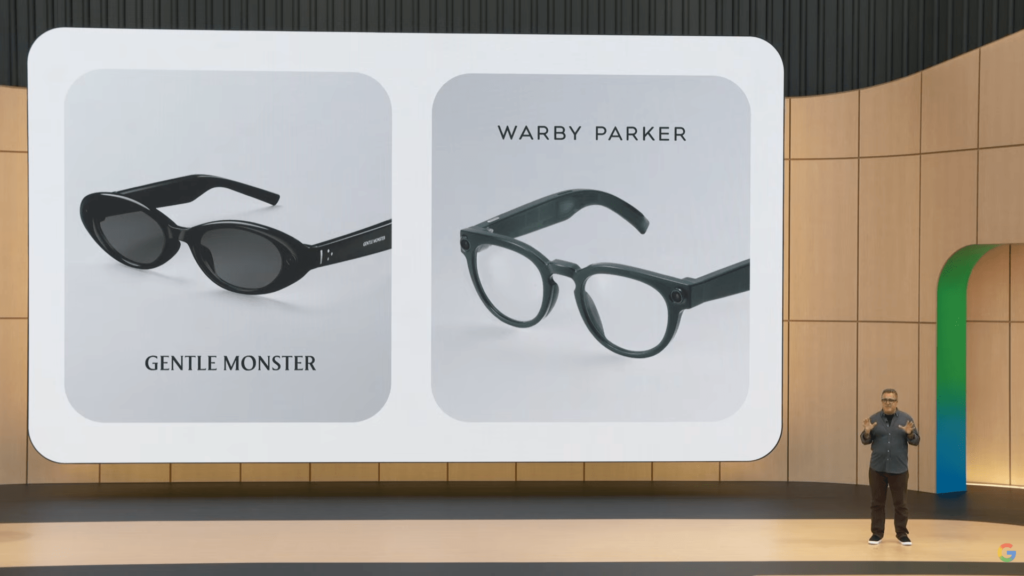
Google’s new smart glasses under the Android XR label are growing. In the future, the Gentle Monster and Warby Parker models will allow users to operate navigation, messages, photos and much more directly on their head without having to constantly take their smartphone out of their pocket. Features such as spoken and written language translation, access to apps, navigation and Google search are integrated. The AI functions are closely woven into the surface of the glasses, for example in the form of overlay displays or a voice assistant.
Infrastructure in the background: TPUs and antigravity
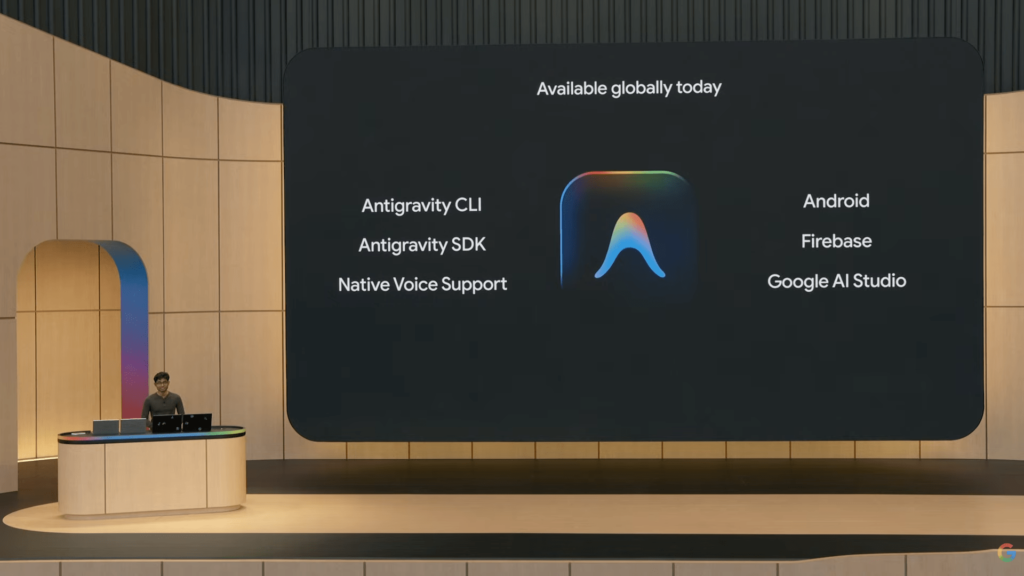
Without a strong hardware infrastructure, the “agentic AI” vision does not work. Google has therefore reiterated that its latest TPUs (Tensor Processing Units) and the Antigravity platform form the basis for the new agent workloads. Antigravity is the new “agent backend”, i.e. the platform through which companies and developers can operate AI agents with long-running context, security and scaling. What is critical, however, is that most of these new infrastructure features and AI models are also initially available in the USA and in selected cloud regions.
Conclusion: A regional AI dream
Google I/O 2026 impressively shows how far Google’s AI vision has already progressed: agents working everywhere in the system, a reimagined search, deeply embedded AI in all services and a massive infrastructure behind it. However, the very USA-centric rollout strategy remains problematic: Anyone who lives outside the USA will only see the announcements, not the live functions.

Amit Gohar is Technical writer at ResearchSnipers.com, he is well versed Technology News writer, he has completed is MS computer Science in 2020. He can be reached at amit.g@researchsnipers.com