AI in the job: Time saved is usually spent on “botsitting”
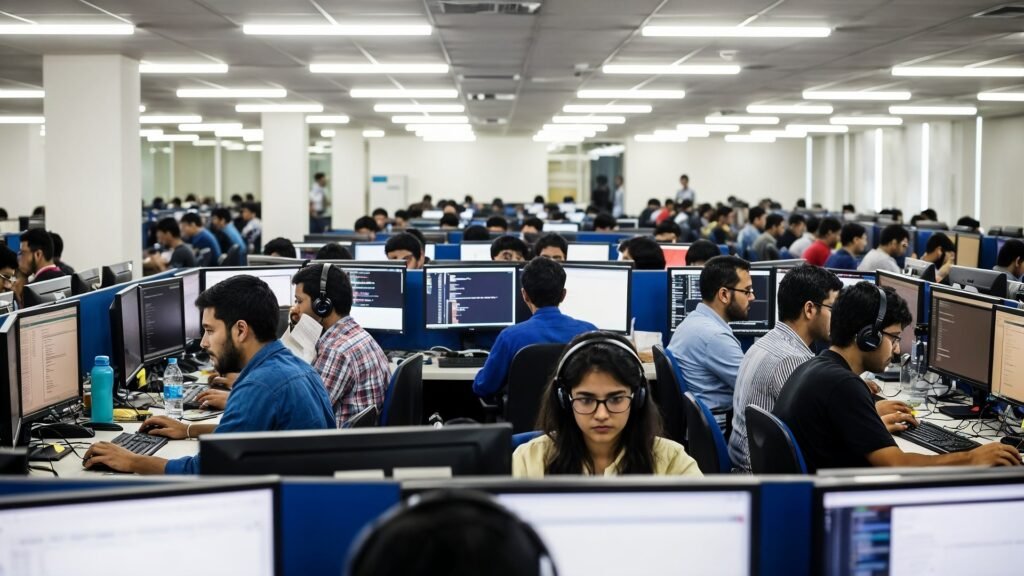
The use of AI technologies saves employees a lot of working time. However, a good portion of the hours gained now have to be used to look after the AI.
Employees must correct AI errors
This is the result of a current study by the Work AI Institute, for which around 6,000 digital employees in the USA, Great Britain and Australia were surveyed, reports Los Angeles Times. According to this, users of AI applications gain an average of around eleven working hours per week. However, they must reinvest a significant portion of this time to monitor the systems’ outputs, correct errors, and reformulate inputs. On average, respondents spend more than six hours per week on this type of monitoring and follow-up. The study also shows a discrepancy between individual and corporate advantages. While three quarters of employees report higher personal productivity, only 13 percent of companies see noticeable business success or additional growth from this.
One of the authors of the study, technology management professor Paul Leonardi from the University of California at Santa Barbara, points out that the effort required to use AI is often underestimated. Many employees would first have to collect relevant documents, information and background knowledge so that the systems could deliver usable results. There is also the time for quality control of the content generated. According to the researchers, more than a third of the total AI usage time is now spent on so-called “botsitting”, i.e. monitoring and correcting applications. A similar proportion of time is spent actually working with the programs. What is particularly problematic is that more than one in three AI sessions fail, requiring extensive rework or a complete restart.
Source of error AI
The study also warns of increasing dependence on the systems. 41 percent of those surveyed said that they occasionally pass on AI-generated work results whose content they themselves could not fully explain. As an example, the authors cite a young software developer who took over large amounts of AI-generated program code without checking. Errors had to be corrected later by experienced colleagues under time pressure. This is not an isolated case in IT departments. According to the researchers, the introduction of AI technologies is primarily developing a new form of work: employees are increasingly taking on the role of managers of their AI tools. According to the authors, this additional effort will likely remain an integral part of everyday work in the future.

Research Snipers is currently covering all technology news including Google, Apple, Android, Xiaomi, Huawei, Samsung News, and More. Research Snipers has decade of experience in breaking technology news, covering latest trends in tech news, and recent developments. Can be reached at author1@researchsnipers.com