From Silos to SecOps: what is SecOps and Why SMEs Care

A suspicious login appears at 9:12 on Monday morning. The security analyst disables the account, but the infrastructure team restores access minutes later after an employee raises a support ticket. Both teams followed their procedures. Together, they made the incident harder to contain.
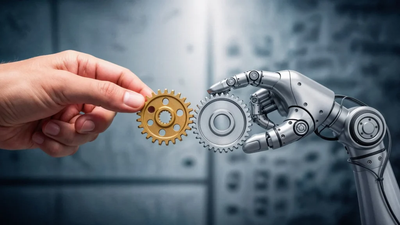
This is the problem behind the question: what is SecOps? SecOps is an operating model that joins security and IT operations around shared visibility, investigation, containment, recovery, and improvement. It isn’t simply a security operations center, nor is it a fresh label for the same tools.
For an SME, that distinction matters. A smaller business may have one administrator managing identity, endpoints, cloud services, backups, and user support. When a real incident lands, the issue isn’t always missing technology. Often, nobody knows who can isolate a device, suspend an account, contact a supplier, or approve downtime.
What SecOps Changes Inside an SME
Ask five people who own a security incident, and you may get five different answers. SecOps exists to remove that uncertainty before it becomes a business problem. That’s one reason the question what is SecOps continues to surface among SME leaders trying to improve incident response.
Security and IT Stop Working Separate Queues
Traditional IT operations are measured through availability, ticket closure, patch success, and user satisfaction. Security teams tend to focus on exposure, detection, containment, and policy breaches. Those goals aren’t natural enemies, but they can collide.
For SMEs, understanding what is SecOps for businesses, the key change is how these responsibilities connect. The people detecting suspicious activity work from an agreed process with those who can suspend accounts, isolate devices, alter network controls, or restore affected services.
Take endpoint isolation. Security may want an affected laptop disconnected immediately. IT may hesitate because the device belongs to a finance manager closing monthly accounts. A SecOps model doesn’t pretend that tension has disappeared. It gives both sides an agreed decision path before the alert arrives.
That’s the real shift. Security becomes part of operational work rather than a late-stage objection to it.
Alerts Gain Business Context
Understanding what is SecOps becomes easier when looking at incident triage in practice. An alert marked “high severity” doesn’t tell an SME what to do next. Is the affected device a test machine, a payroll server, or the managing director’s laptop? Did the login come from a known contractor? Is the application exposed to customers?
SecOps adds that operational context during triage. Asset ownership, identity data, change records, network activity, and business criticality should appear in the same investigation path.
Without them, analysts waste time collecting basic facts while an attacker keeps moving. This doesn’t require a giant data lake. Start with accurate asset records and dependable log sources. Boring work, perhaps. Still decisive.
Response Becomes Repeatable
Many smaller firms still respond through improvised calls, chat messages, and whoever happens to be online. That can work for a minor malware case. It falls apart when email, identity, and cloud storage are all involved.
A usable playbook should state:
- Who owns the incident
- Which conditions permit automatic containment
- Who can approve disruptive action
- What evidence must be preserved
- When legal, insurance, or leadership contacts enter the process
- How recovery will be validated
The European Union Agency for Cybersecurity guidance on setting up a CSIRT and SOC treats establishment and continued improvement as staged work. That’s a sensible approach for SMEs. Build the response muscle first, then extend it.
Why SMEs Can’t Treat SecOps as an Enterprise Luxury
Large organizations can absorb some duplication. SMEs usually can’t. When one engineer checks endpoint alerts, another reviews identity logs, and a third handles network changes without a shared case record, scarce hours disappear.
The most effective SecOps programs often begin with a handful of well-defined workflows rather than a sweeping operational overhaul.
The financial argument is just as plain. The 2025 Data Breach Investigations Report examined 22,052 incidents and 12,195 confirmed breaches, including dedicated analysis of small and medium-sized businesses.
Its findings cover recurring problems such as ransomware, stolen credentials, exploited vulnerabilities, and third-party involvement.
Those incident types rarely stay inside a single technical boundary. A stolen password can lead to mailbox access, altered payment details, cloud file theft, and persistence through a newly registered device.
Who handles that? Identity, email, finance, legal, and IT may all be involved. SecOps gives them one operating thread.
That need becomes sharper during change. A mid-size professional services firm migrating applications to hybrid cloud may relax access controls temporarily, create privileged service accounts, or move data outside normal monitoring.
Guidance on protecting business data during platform migration reinforces why inventories, permissions, backups, and recovery checks belong in the change plan. SecOps connects those controls to detection and response rather than leaving them inside a project document.
A Practical SecOps Framework for Lean Teams
The most effective SecOps programs often begin with a handful of well-defined workflows rather than a sweeping operational overhaul.
Start With Two Incident Paths
Don’t write twenty playbooks. Pick two scenarios that could stop the business, perhaps ransomware and account takeover.
Walk each scenario from first signal to restored service. Record every handoff, approval, missing log, and uncertain owner. If the team can’t answer who has authority to disable a senior executive’s account at 2 a.m., the playbook isn’t ready.
Test it. Quietly, then under time pressure.
Build Around Evidence, Not Product Categories
Tool labels can encourage fresh silos. Endpoint data sits in one console, firewall events in another, identity activity elsewhere, and tickets hold the decisions.
Instead, define the evidence needed to answer practical questions:
- What happened?
- Which user, asset, or service is affected?
- Is the activity still continuing?
- What can be contained safely?
- What must be restored, watched, or reported?
Technology should support that chain. The tooling may include centralized event analysis, endpoint and network detection, automation, case management, threat intelligence, and exposure monitoring. Buying each capability won’t create SecOps by itself.
Automate Narrowly
Automation helps lean teams, but broad autonomous response can turn a weak signal into a business outage. Begin with low-risk actions: enrich an alert with asset details, retrieve recent authentication records, check whether an indicator appears elsewhere, or open a case with the right owner.
Containment automation needs stricter boundaries. Disable a dormant test account automatically? Reasonable. Shut down production access because of one unusual login? Probably not.
Human judgment still matters.
Measure Decisions and Outcomes
Alert volume is a workload count, not a measure of resilience. Better measures include time to establish scope, time to contain confirmed activity, repeat incidents caused by unresolved weaknesses, recovery success, and the percentage of critical assets producing usable telemetry.
Also track rejected actions. If analysts repeatedly recommend isolation but operational owners decline it, leadership has found a risk decision hiding inside normal workflow.
SecOps Is an Operating Discipline, Not a Department
So, what is SecOps when budgets and staffing are tight? It’s the discipline of joining security evidence with operational authority, so incidents move from signal to decision without vanishing between teams.
An SME doesn’t need to recreate a global security organization. It needs clear ownership, connected evidence, tested playbooks, guarded automation, and honest measures of response. The payoff isn’t a prettier dashboard. It’s fewer minutes spent debating who should act while the business remains exposed.

Alexia is the author at Research Snipers covering all technology news including Google, Apple, Android, Xiaomi, Huawei, Samsung News, and More.