Multi-Lane Free Flow Tolling: What Changes for Vehicle Owners?
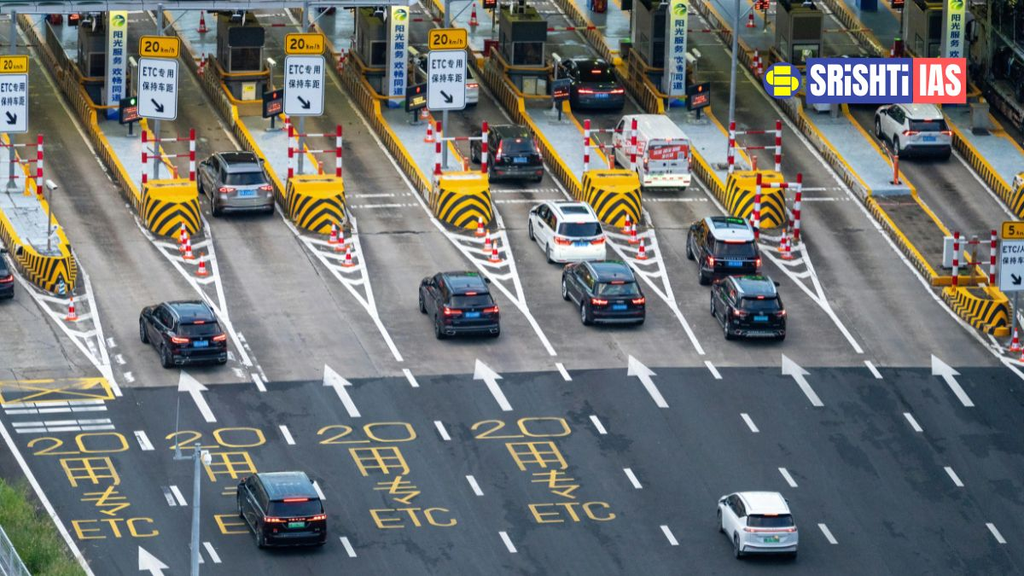
Every toll plaza today still has some version of a physical barrier, a booth, a lane, a gate that lifts once payment clears. A newer approach is being introduced that removes even that. No slowing down for a dedicated lane, no barrier lifting, just a highway that charges you as you pass through it at full speed.
This is a meaningful shift from how tolling has worked so far, and it’s worth understanding before it becomes the norm on more stretches.
What Exactly Is Multi-Lane Free Flow Tolling?
Basically, you don’t slow down at all. No dedicated lane to funnel into, no barrier waiting to lift once payment clears, just the highway itself doing the work of identifying your vehicle and charging it while you drive straight through at whatever speed you were already going.
The government actually announced a new toll policy back in August 2025 built around exactly this idea, moving away from physical booths toward sensor-based collection, mainly to cut the delay that still exists even in a fast electronic lane today.
How Is This Different From the Current Setup?
Right now, even with FASTag, the underlying design still assumes a slowdown. Vehicles enter a specific lane, a reader scans a windscreen tag, and a barrier lifts once the transaction clears, all of this happening quickly but still requiring the vehicle to funnel into that one lane. Multi-lane free flow removes the lane requirement entirely.
Every lane becomes usable at normal speed, and the toll point itself becomes closer to an invisible line on the highway rather than a physical structure you have to navigate around.
How Does the System Actually Know Which Vehicle to Charge?
Generally, it does so through a combination of identification methods rather than one single device.
Camera-based number plate recognition can identify a vehicle as it passes, and where a vehicle carries an onboard positioning unit, its location can be tracked against the highway stretch actually used, allowing charges based on distance traveled rather than a flat amount at one point.
The exact mix of technology can vary by stretch as this rolls out, and both approaches are meant to work without the vehicle needing to stop or slow down meaningfully.
Does This Replace FASTag Entirely?
Not immediately, and possibly not at all in the way people assume. The existing tag and its linked account or wallet remain the mechanism through which the actual deduction happens; only the physical experience of passing through a toll point changes.
Think of it less as FASTag disappearing and more as the barrier and dedicated lane disappearing around it, with the underlying account-based payment continuing to function much as it does today.
What Actually Changes for a Vehicle Owner Day to Day?
Mostly the driving experience itself. No slowing down, no queueing behind a vehicle stuck at a barrier, no risk of a barrier failing to lift after a valid payment. A few things that stay exactly the same underneath this, though:
- Your linked account or wallet still needs a sufficient balance for the deduction to go through cleanly.
- Vehicle registration details still need to match what’s on record, since a mismatch is what causes charging errors either way.
- A penalty for an invalid or insufficiently funded account is still the likely outcome of skipping payment, even without a barrier to stop you physically.
How Do You Keep the Payment Side Ready for This?
The same way you do today, largely. Recharging a linked wallet through a UPI app, a card, or net banking keeps the underlying account ready regardless of whether the toll point ahead has a barrier or not.
If anything, keeping this funded matters slightly more under a barrier-free system, since there’s no physical gate stopping an unfunded vehicle from passing through unnoticed until the bill or penalty shows up later.
What About Errors or Disputes Under This System?
A few new possibilities alongside the old ones. A misread number plate or a positioning glitch could, in theory, charge the wrong vehicle or the wrong distance, especially early on while the technology is still being refined.
The dispute process is expected to work much like it does today, raised through the operator or issuer, with a genuine error correctable once flagged rather than something you’re simply stuck with.
Mistakes People Should Avoid As This Rolls Out
- A lot of drivers will likely assume nothing on their end needs attention simply because there’s no barrier to interact with anymore, forgetting their linked account still needs to be funded and accurate.
- Some may ignore updated vehicle registration requirements, assuming the system will sort out a mismatch automatically.
- Others might not realize a missing barrier doesn’t mean a missed toll goes unnoticed, since detection now happens continuously.
- And plenty will likely skip checking their transaction history simply because the experience feels more passive than watching a barrier lift.
The Bottom Line
Multi-lane free flow tolling changes the physical experience of paying a toll far more than it changes the underlying payment mechanism. The barrier disappears, the lane requirement disappears, but the need for a funded account and accurate vehicle details doesn’t go anywhere.
Understanding that the convenience is mostly about speed and flow, not about the payment responsibility shifting away from you, is what keeps this transition from catching anyone off guard.

Alexia is the author at Research Snipers covering all technology news including Google, Apple, Android, Xiaomi, Huawei, Samsung News, and More.