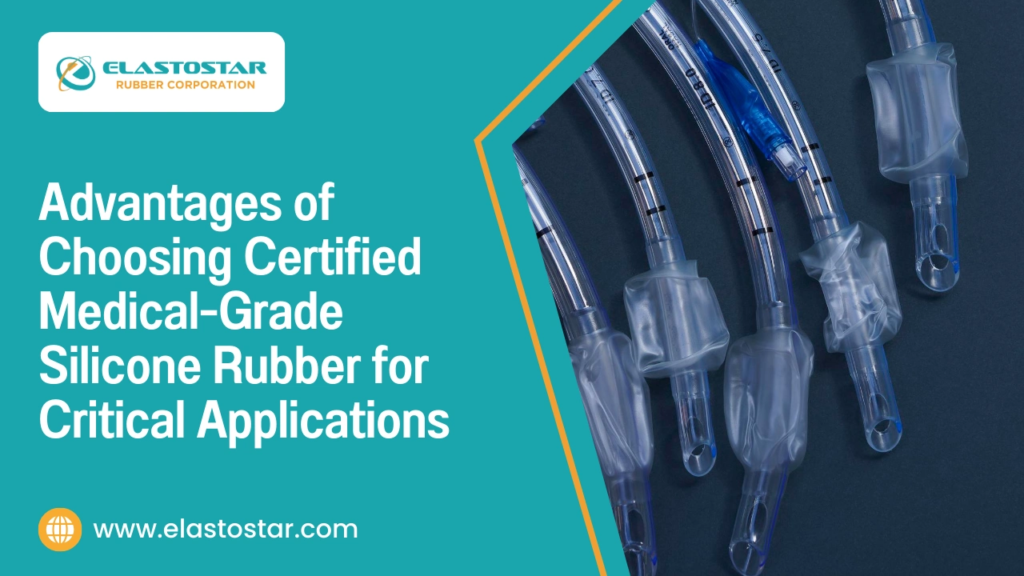
Advantages of Choosing Certified Medical-Grade Silicone Rubber for Critical Applications
In critical industries, materials are not just background components. They directly influence safety, reliability, and trust. In healthcare, especially, a sealing failure or material breakdown is more than an inconvenience. It can impact patient outcomes, regulatory compliance, and brand reputation.
This is where Medical-Grade Silicone Rubber stands apart. Known for its purity, durability, and adaptability, it has become a go-to material for manufacturers developing products that must perform flawlessly. From life-saving devices to sterile laboratory systems, high-quality medical-grade silicone rubber delivers performance where it matters most.
Understanding Medical-Grade Silicone Rubber
At its core, Medical-Grade Silicone Rubber is a specially formulated elastomer engineered for safety and consistency. It is not simply standard silicone with a new label. It undergoes extensive testing and controlled manufacturing to ensure it meets strict healthcare requirements.
What makes it unique?
- Biocompatibility – Safe for contact with skin and, in certain grades, internal tissues
- Flexibility – Maintains elasticity even after repeated compression or bending
- Temperature resistance – Performs in freezing storage and high-heat sterilization
- Chemical stability – Resists breakdown from disinfectants and medical fluids
The difference between general-purpose silicone and FDA-approved medical silicone rubber lies in certification and traceability. Medical-grade materials are tested for cytotoxicity, irritation, and sensitization. They are produced in tightly monitored environments to reduce contamination risk.
In regulated industries, that level of control is not optional. It is expected.
Key Advantages of Medical-Grade Silicone Rubber
The real value of Medical-Grade Silicone Rubber becomes clear in demanding applications.
Patient safety comes first.
Its biocompatible and non-toxic nature minimizes the risk of allergic reactions or tissue irritation. For devices in prolonged contact with the body, that reliability provides peace of mind.
It handles sterilization with confidence.
Medical components may undergo:
- Steam autoclaving
- Gamma radiation
- Chemical disinfection
FDA-approved medical silicone rubber maintains its mechanical strength and elasticity even after repeated cycles.
It performs in extreme conditions.
Temperature swings, humidity shifts, and environmental exposure do not easily compromise silicone. It remains stable where other materials may harden or crack.
It lasts.
High-quality medical-grade silicone rubber resists compression set and tearing, supporting a longer service life and fewer replacements.
It adapts to complex designs.
Manufacturers often require intricate geometries and tight tolerances. That is why custom medical silicone rubber gaskets and seals are widely used in advanced device assemblies.
And perhaps just as important, it is generally hypoallergenic. For wearable and skin-contact products, comfort matters as much as durability.
Critical Applications in the Medical Industry
Step inside a hospital or laboratory, and you will likely encounter silicone components in multiple forms.
In medical devices, silicone is used in:
- Catheters
- Respiratory masks
- Pump seals
- Implantable components
Its softness improves comfort, while its resilience supports long-term performance.
In pharmaceutical and laboratory environments, Silicone Rubber for Healthcare industries helps maintain sterile barriers. Seals and gaskets must prevent leaks while resisting exposure to chemicals and cleaning agents.
Wearables and prosthetics depend on materials that remain comfortable throughout daily use. Silicone offers a rare balance of softness and durability, making it suitable for devices worn for hours at a time.
Even behind the scenes, in hospital fluid systems and sterile processing units, custom medical silicone rubber gaskets and seals quietly support infection control and operational reliability.
Advantages in Non-Medical Critical Applications
Interestingly, the same properties that make silicone safe for healthcare also benefit other high-performance industries.
In the food and beverage sector, material purity and temperature resistance are highly valued. Silicone that meets medical or food-contact standards adds an extra layer of safety assurance.
In automotive and aerospace applications, resistance to heat and chemical exposure is vital. The durability of Medical-Grade Silicone Rubber supports sealing and insulation systems under demanding operating conditions.
In electronics and consumer products, especially wearables, silicone provides:
- Electrical insulation
- Shock absorption
- Skin-contact safety
Its versatility allows engineers to design with confidence across industries.
Cost-Benefit Considerations
It is true that medical-grade materials may carry a higher initial cost. However, the long-term picture often tells a different story.
Reliable materials help:
- Reduce maintenance frequency
- Extend product lifespan
- Lower downtime
- Minimize replacement cycles
Using FDA-approved medical silicone rubber also reduces the risk of compliance issues and costly product recalls.
Over time, high-quality medical-grade silicone rubber supports operational stability and regulatory confidence. In regulated markets, that stability can be invaluable.
Choosing the Right Certified Silicone Rubber Supplier
Material quality is only part of the equation. The supplier behind it plays an equally important role.
A reliable partner should offer:
- Verified certifications and documented compliance
- Strong quality control systems
- Batch traceability and testing documentation
- Engineering support for custom designs
For manufacturers developing specialized equipment, the ability to produce custom medical silicone rubber gaskets and seals can make a significant difference in achieving both performance and compliance goals.
Conclusion
In critical applications where safety and compliance are non-negotiable, Medical-Grade Silicone Rubber delivers consistent performance, durability, and biocompatibility. Its resistance to sterilization, temperature extremes, and chemical exposure makes it a reliable solution for healthcare and other regulated industries.
From FDA-approved medical silicone rubber components to custom medical silicone rubber gaskets and seals, selecting high-quality materials directly supports product integrity and long-term reliability. Working with experienced manufacturers such as Elastostar Rubber Corporation further strengthens that advantage through certified materials, controlled processes, and precision engineering expertise.
In environments where performance impacts lives and reputation, dependable material solutions make all the difference.
Frequently Asked Questions
1. What makes silicone rubber “medical-grade”?
Silicone is considered medical-grade when it meets strict biocompatibility and regulatory standards. It undergoes testing for cytotoxicity, irritation, and sensitization, and is manufactured in controlled environments to ensure purity and consistency. Medical-Grade Silicone Rubber must also offer full traceability and documented compliance.
2. Can medical-grade silicone withstand repeated sterilization?
Yes. One of the key advantages of FDA-approved medical silicone rubber is its ability to maintain flexibility and mechanical strength after repeated sterilization cycles, including steam autoclaving, gamma radiation, and chemical disinfection.
3. Is it safe for direct skin or tissue contact?
Certified Medical-Grade Silicone Rubber is designed for safe skin contact and, in certain grades, limited internal use. Its biocompatible and hypoallergenic properties make it suitable for wearable devices, medical tubing, and various patient-contact components.
4. What certifications should I look for when sourcing medical-grade silicone?
You should look for compliance with:
- ISO 10993 biocompatibility standards
- USP Class VI testing
- FDA regulations where applicable
- ISO 13485 or similar quality management systems
These certifications confirm the material meets healthcare industry requirements.
5. How does silicone rubber differ from other elastomers in critical applications?
Compared to many traditional elastomers, high-quality medical-grade silicone rubber offers superior temperature resistance, long-term flexibility, chemical stability, and biocompatibility. It maintains performance in environments where other materials may harden, crack, or degrade.
6. Can medical-grade silicone be used in food or pharmaceutical industries?
Yes. Because of its purity and stability, Medical-Grade Silicone Rubber is widely used in food processing and pharmaceutical manufacturing. Materials that meet medical standards often satisfy food-contact requirements as well, depending on certification.
7. How long does medical-grade silicone last in demanding applications?
Service life depends on operating conditions, but silicone is known for long-term durability. It resists compression set, environmental aging, and chemical breakdown, allowing components such as custom medical silicone rubber gaskets and seals to perform reliably over extended periods.
8. Are there temperature limitations for medical-grade silicone rubber?
Silicone performs across a wide temperature range, typically from very low sub-zero conditions up to high sterilization temperatures. Exact limits depend on the specific formulation, but it is more temperature-stable than many alternative elastomers.
9. Can custom shapes and designs be made using certified silicone rubber?
Yes. Silicone can be molded, extruded, or compression formed into complex geometries. Manufacturers frequently produce custom medical silicone rubber gaskets and seals tailored to specific device designs and sealing requirements.
10. Why is compliance with ISO 10993 and USP Class VI important?
ISO 10993 and USP Class VI certifications verify that the material has passed recognized biocompatibility and safety tests. Compliance helps manufacturers reduce regulatory risk, support product approval processes, and demonstrate commitment to patient safety when using FDA-approved medical silicone rubber.

Alexia is the author at Research Snipers covering all technology news including Google, Apple, Android, Xiaomi, Huawei, Samsung News, and More.